Italy Pavilion
A World Expo pavilion exploring Italy’s regional craft economies
The challenge was to design a World Expo pavilion that captures a nation’s contribution to global progress and culture.

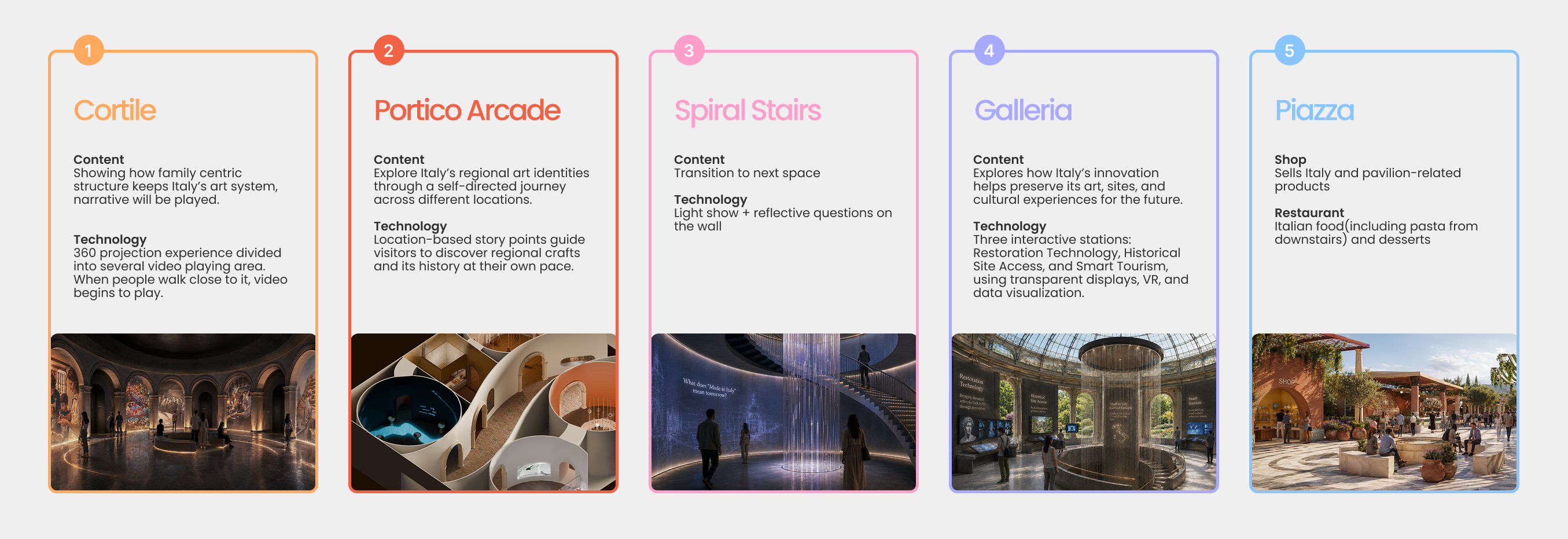
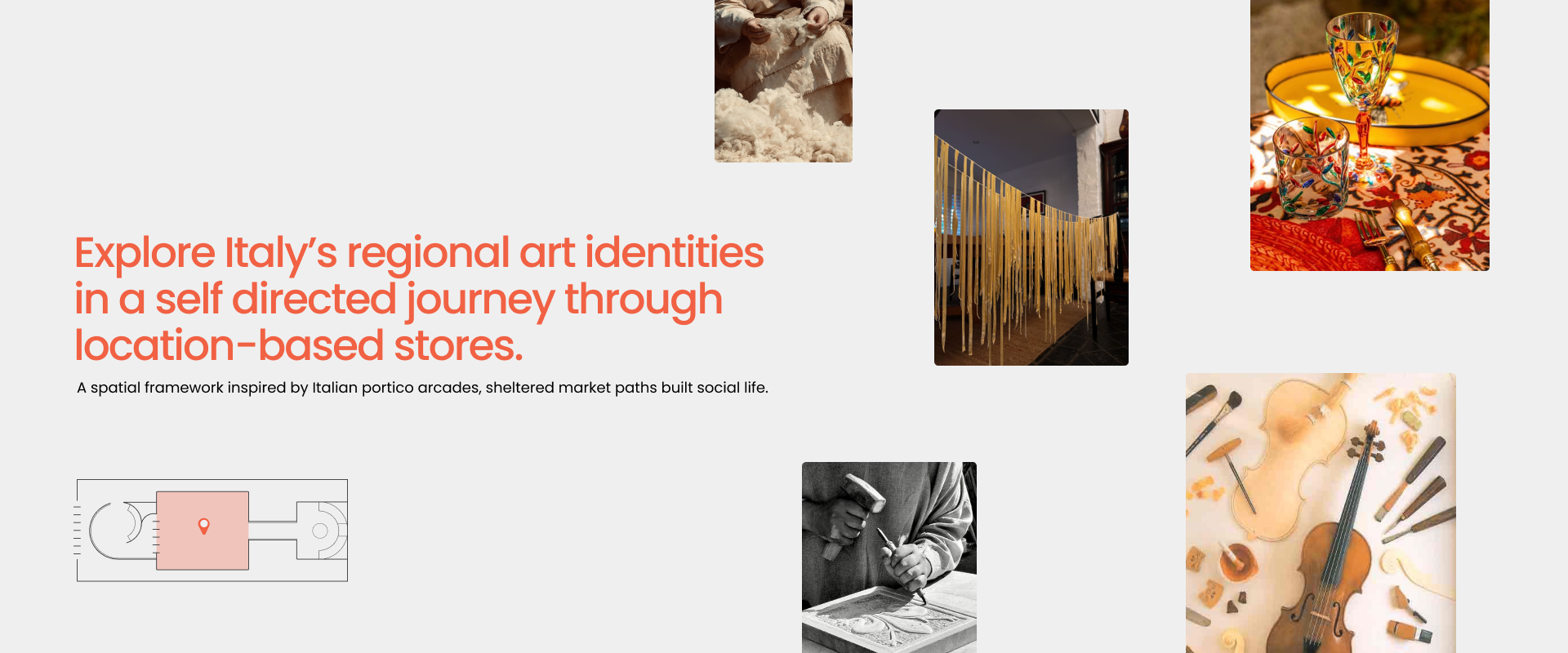
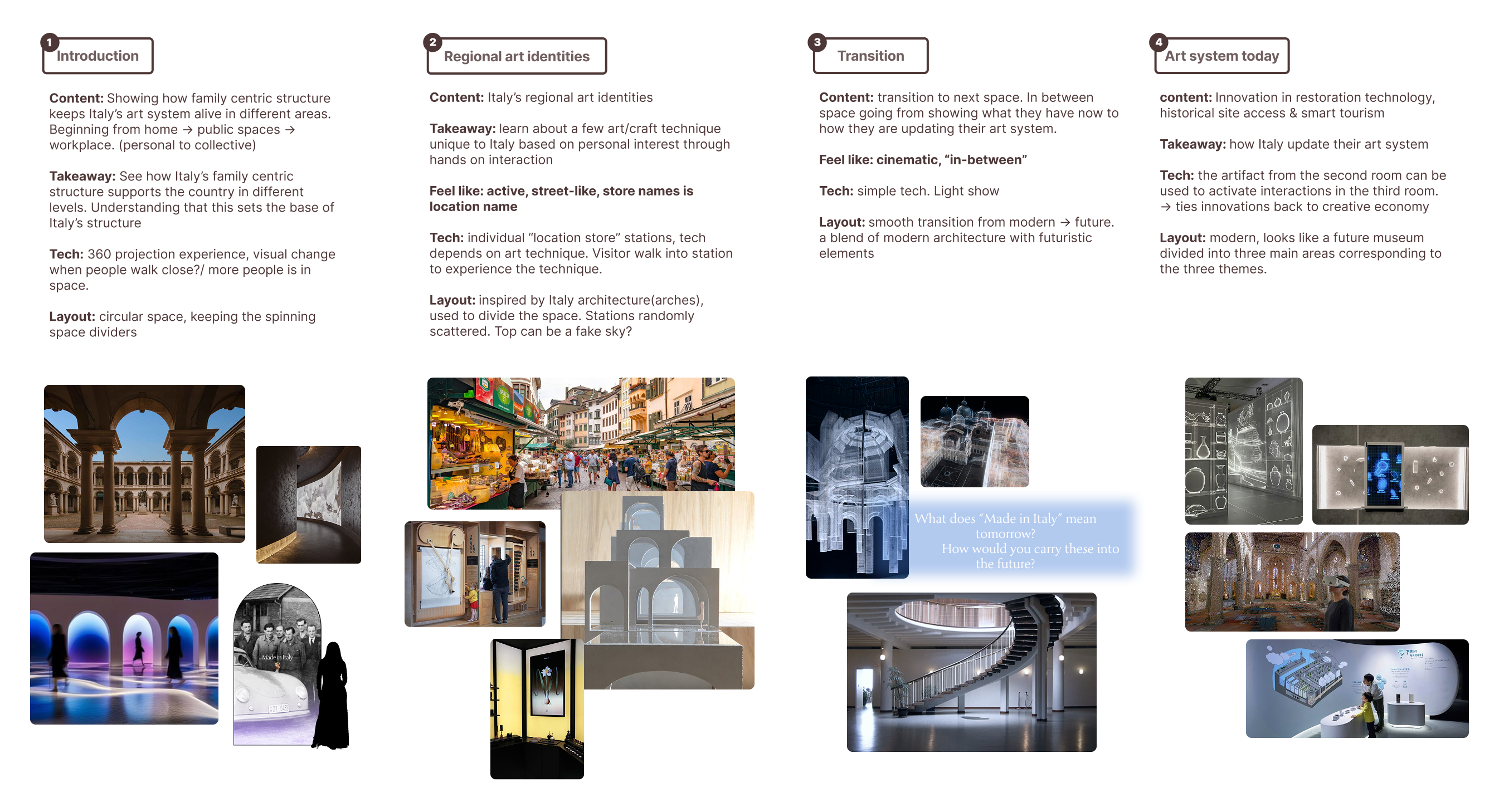
Through research into Italy’s regional industries, creative traditions, and local economies, I focused the larger pavilion narrative on how craft sustains livelihoods across generations. This page focuses on Space 2 of the pavilion, which was selected for further refinement and rendering.
Team
Timeline
Role
Tools
Individual
8 weeks, Spring 2026
Exhibition Experience Designer
TouchDesigner, Blender, Arduino, Figma, Illustrator, Photoshop, After Effects
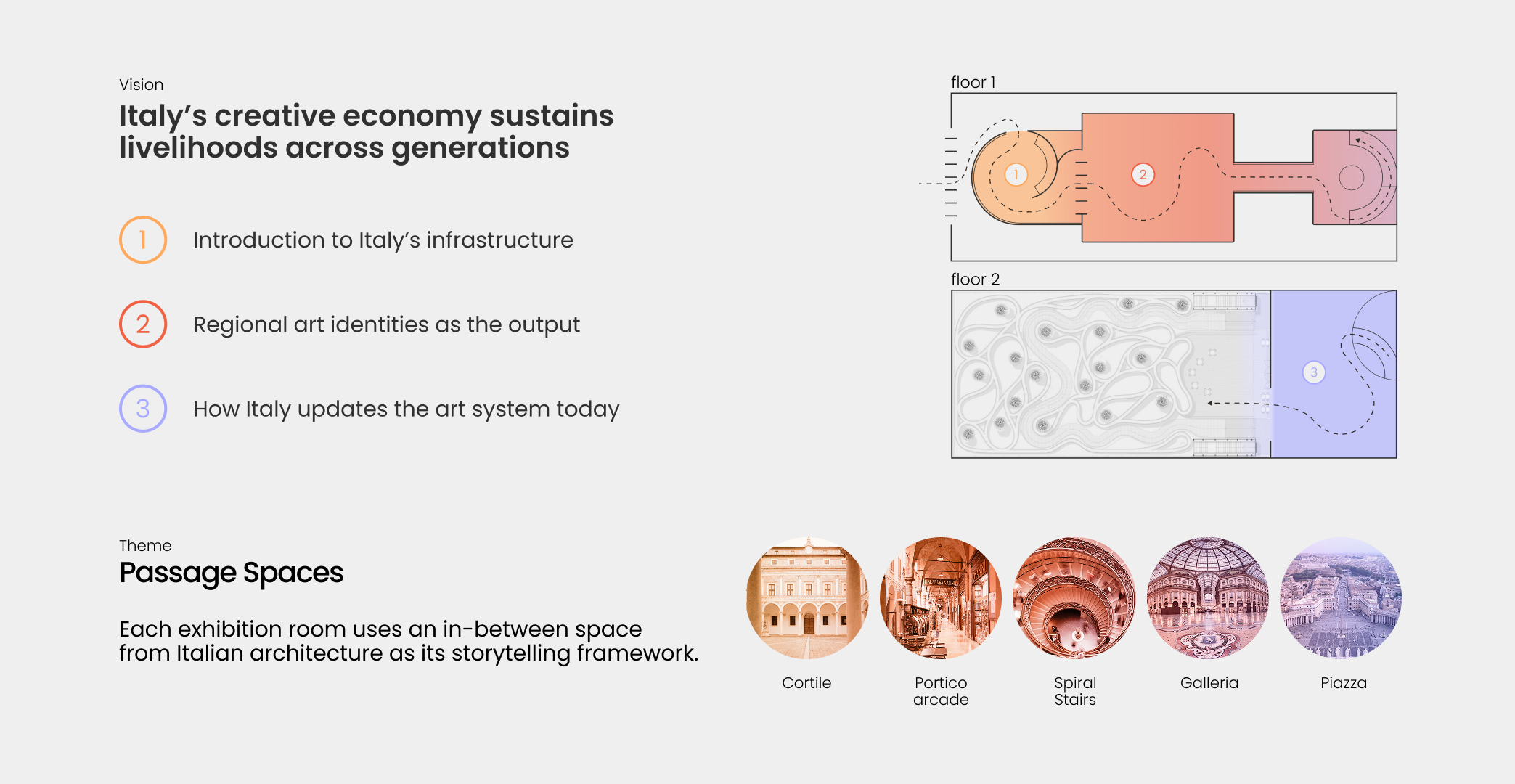
VISION & THEME
CONCEPT
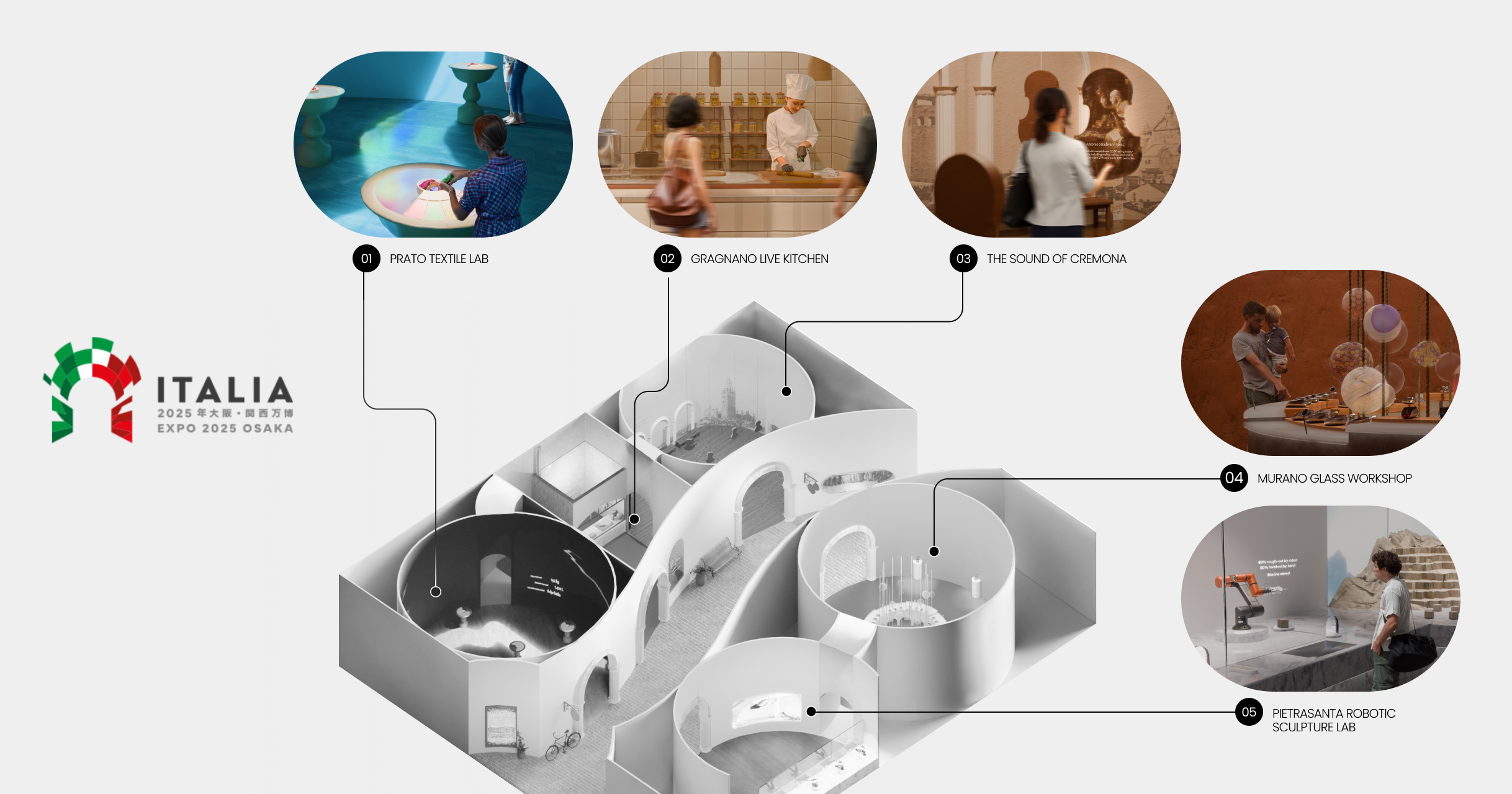
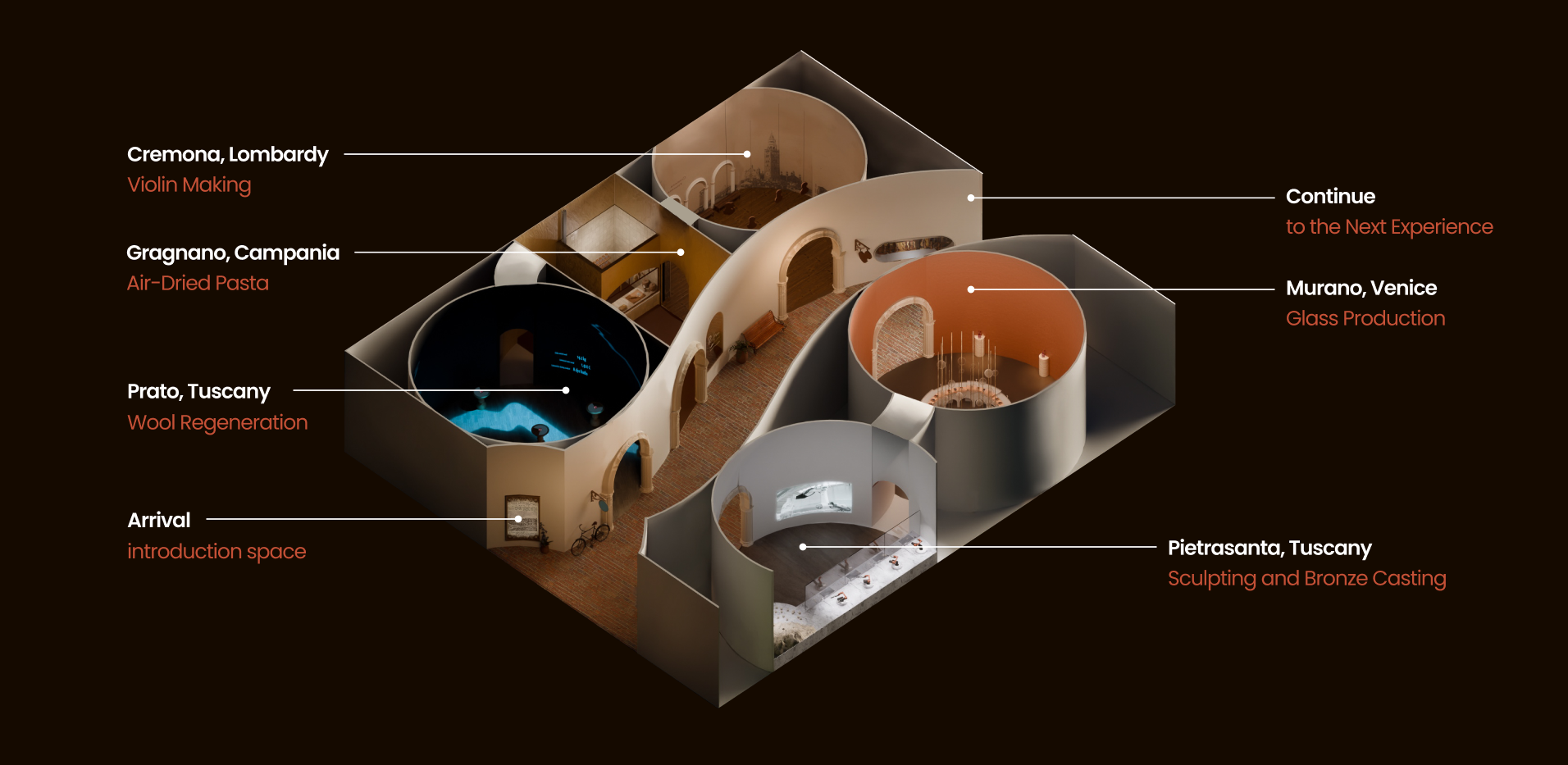
SPACE OVERVIEW
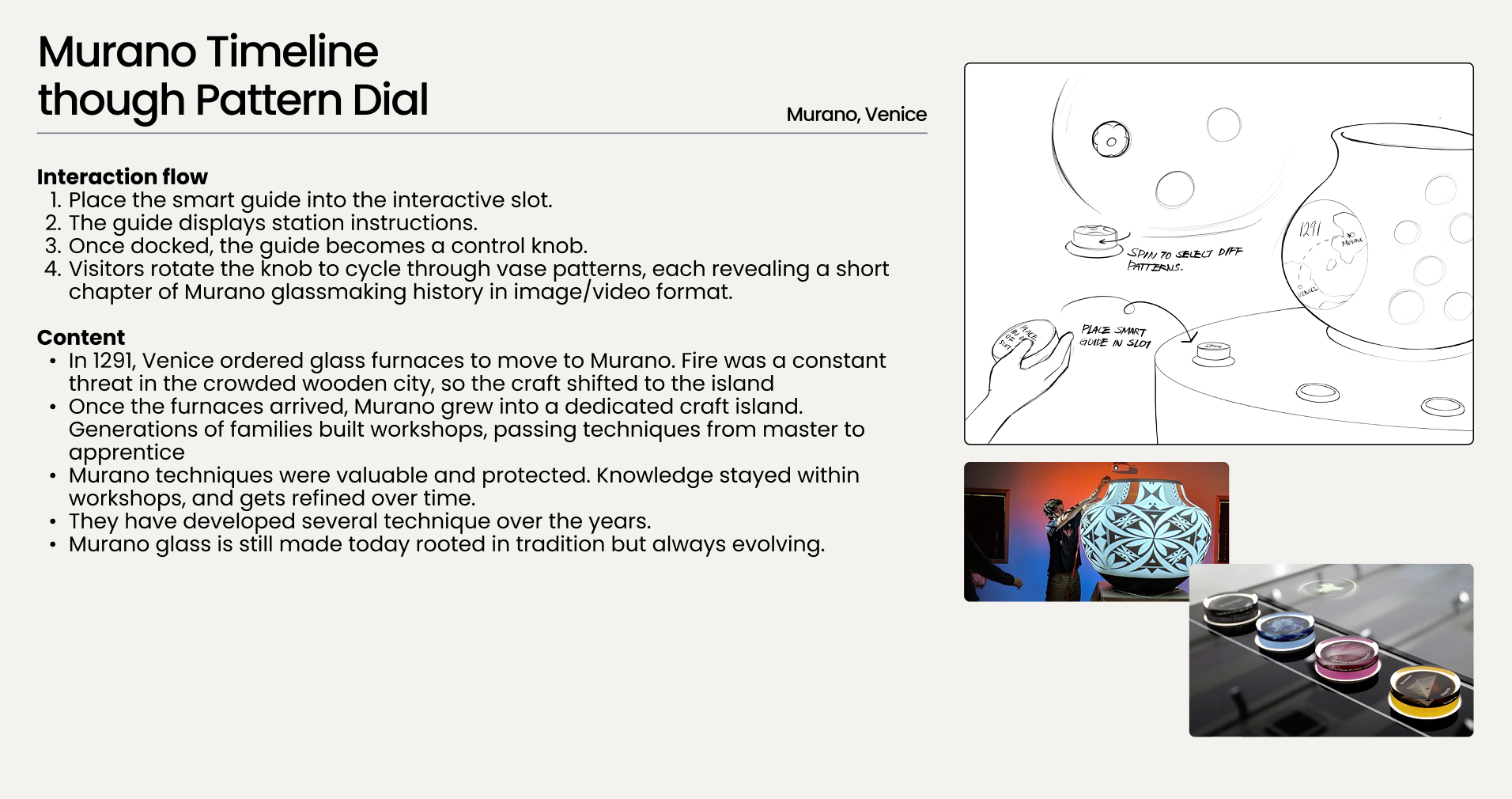
01. MURANO, VENICE
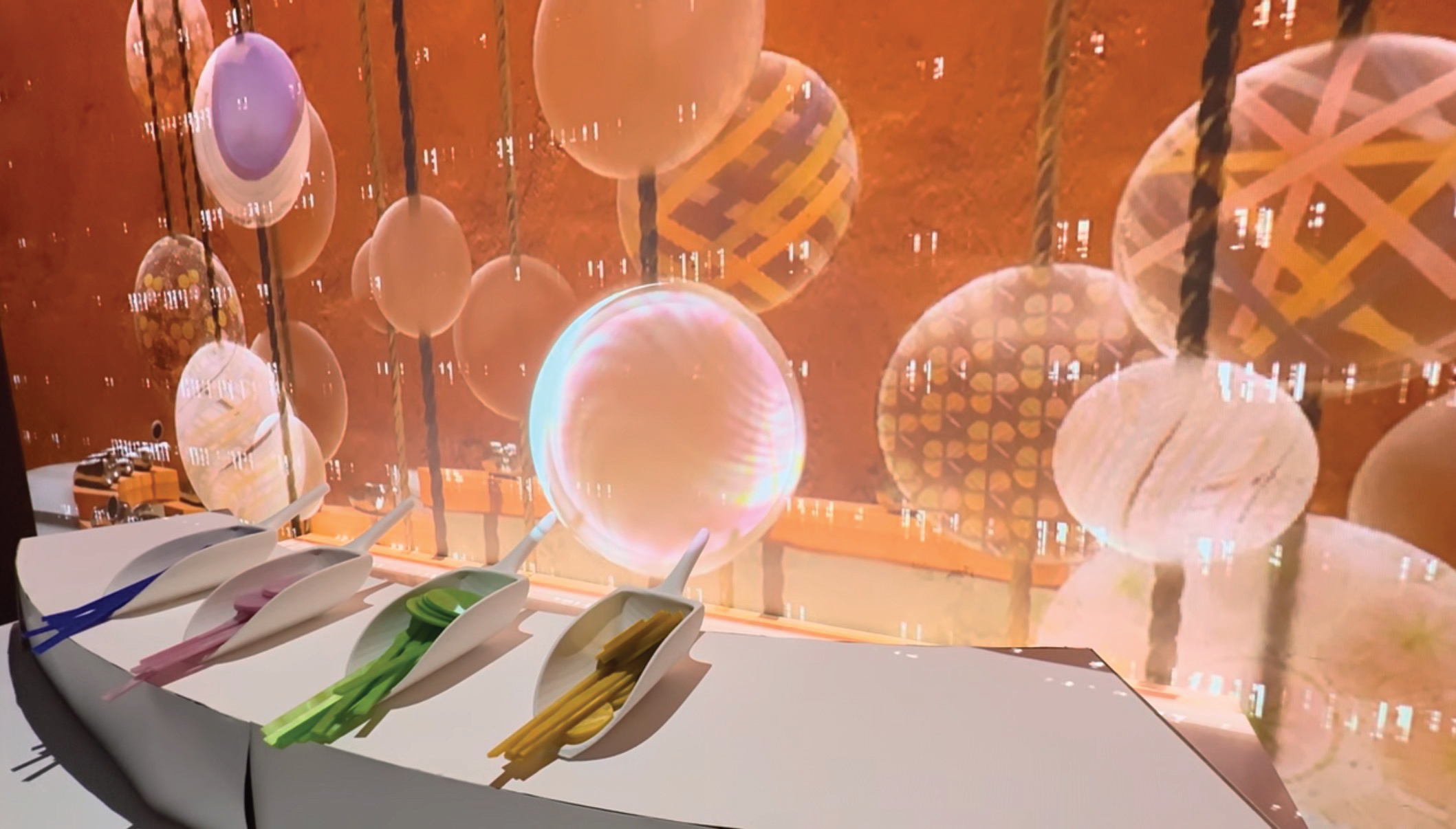
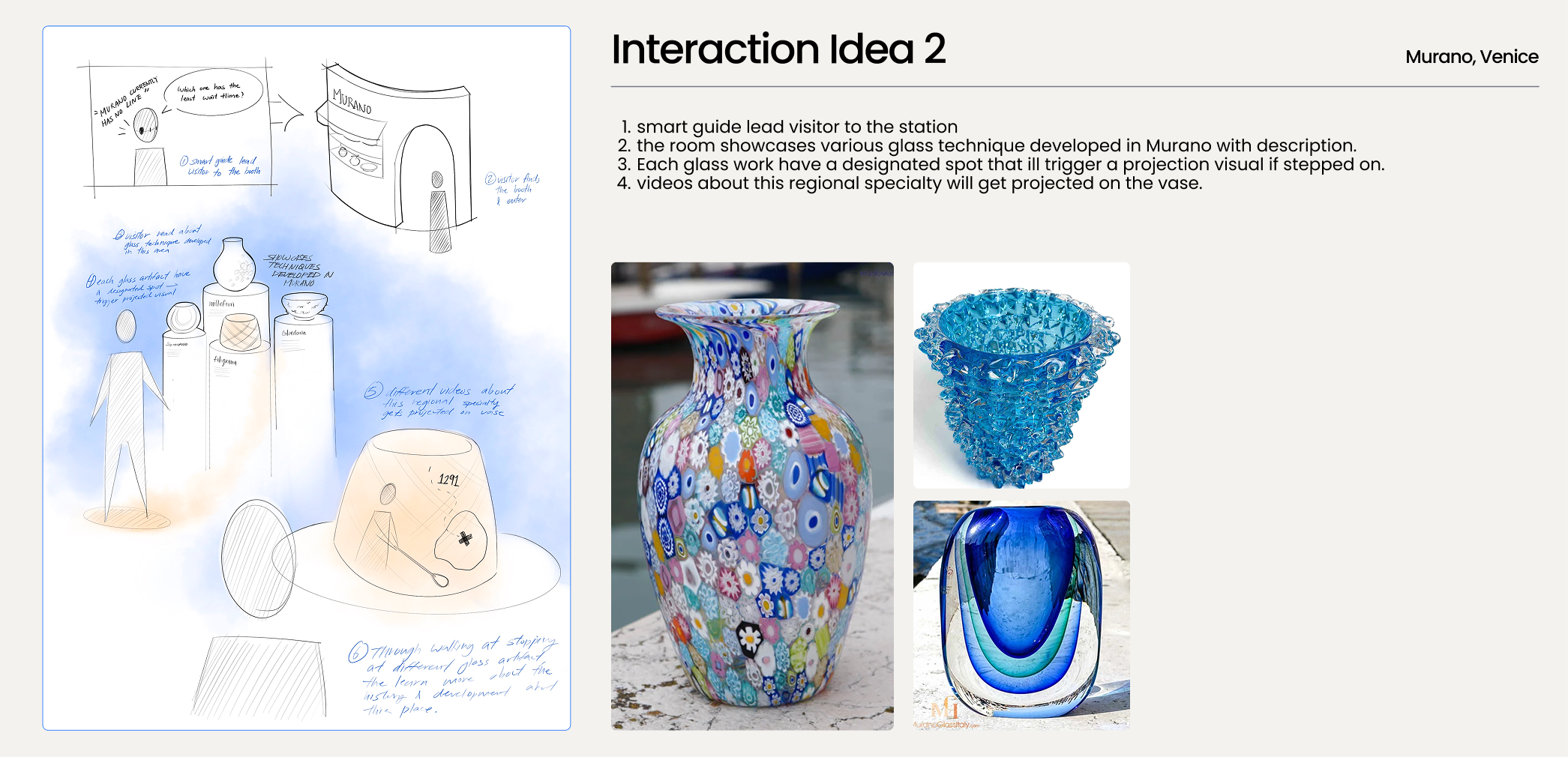
A hands-on glass workshop where visitors create their own Murano-inspired piece.
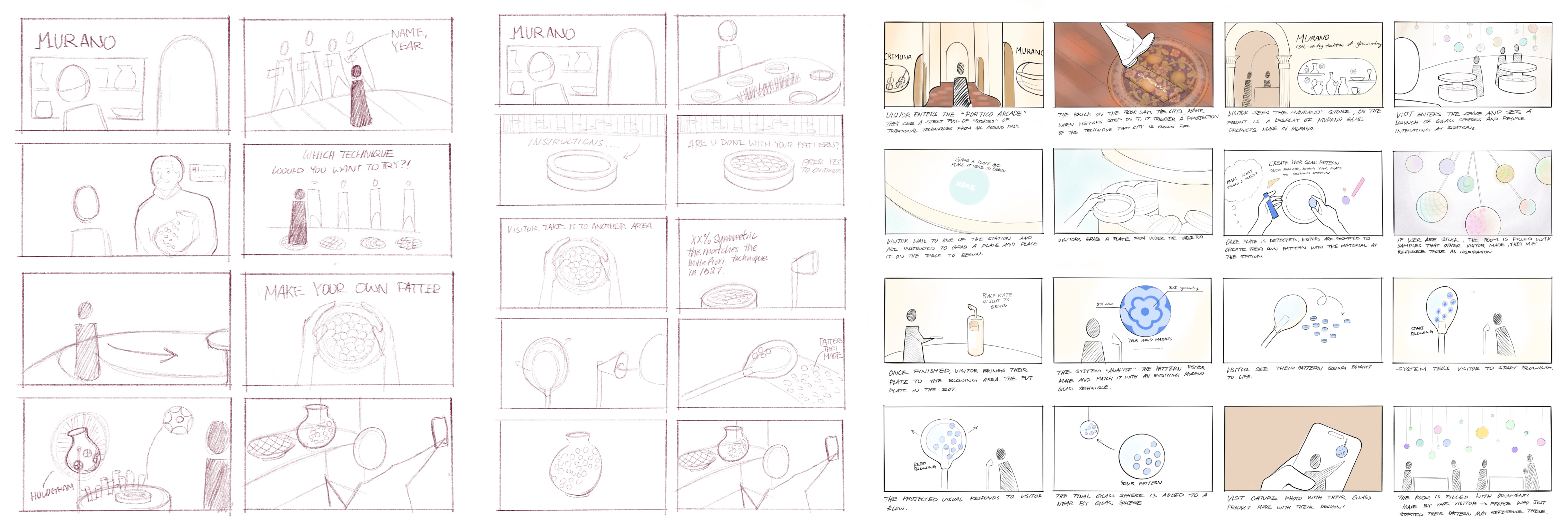
EXPERIENCE WALKTHROUGH
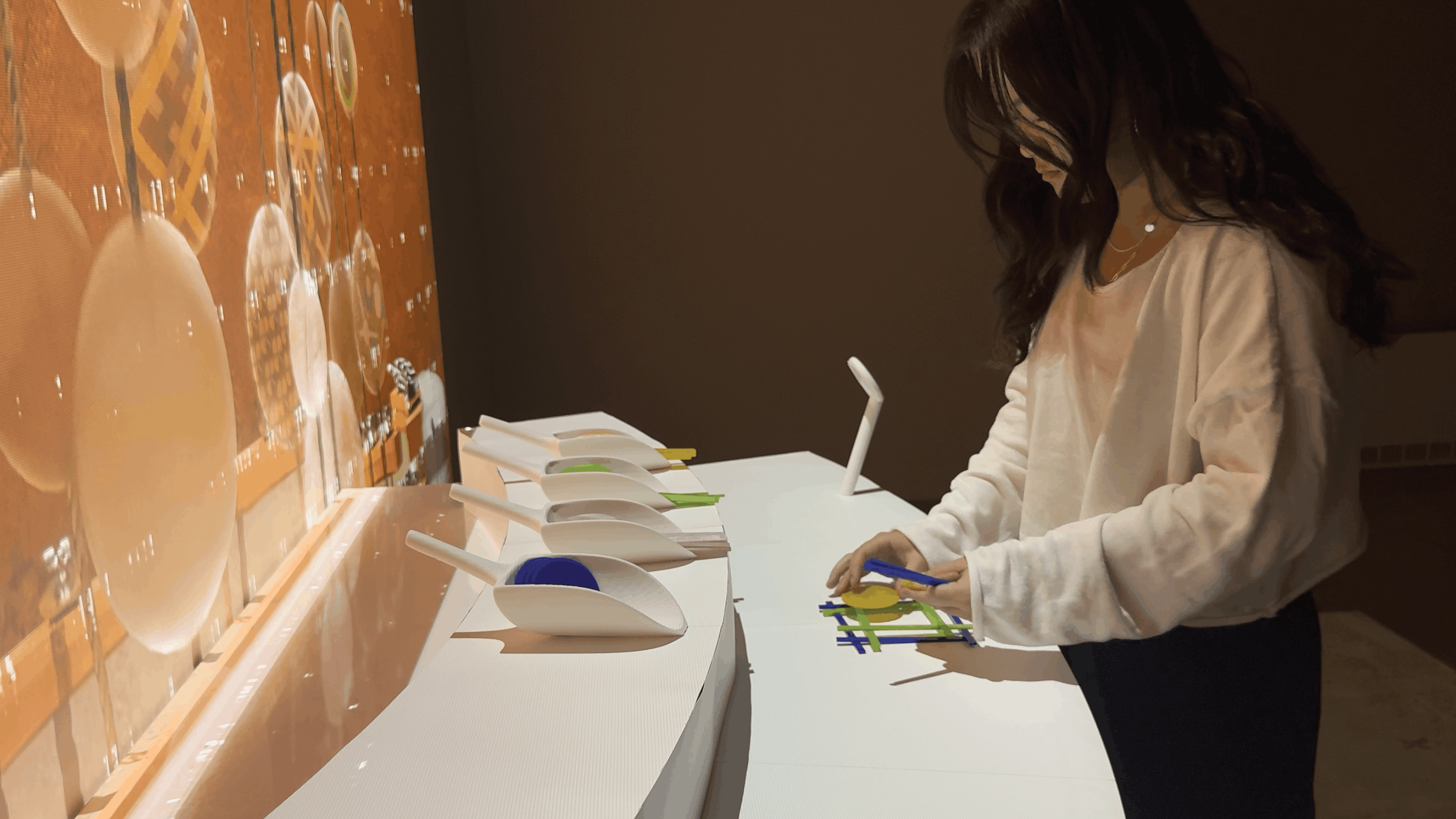
Visitors build their own pattern
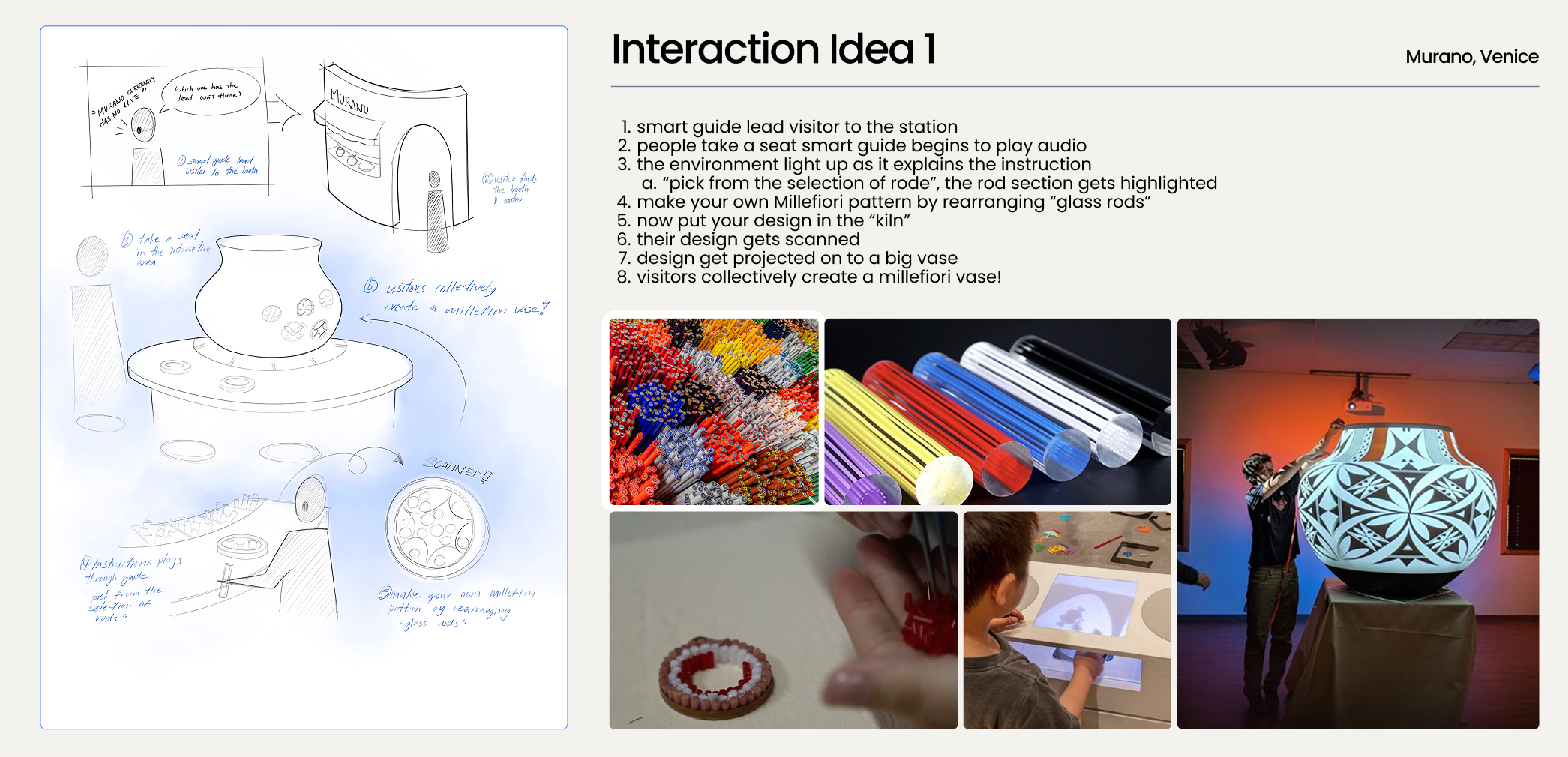
Acrylic pieces in different colors are laid out in front of visitors, while a table projection invites them to compose their own Murano-inspired design.
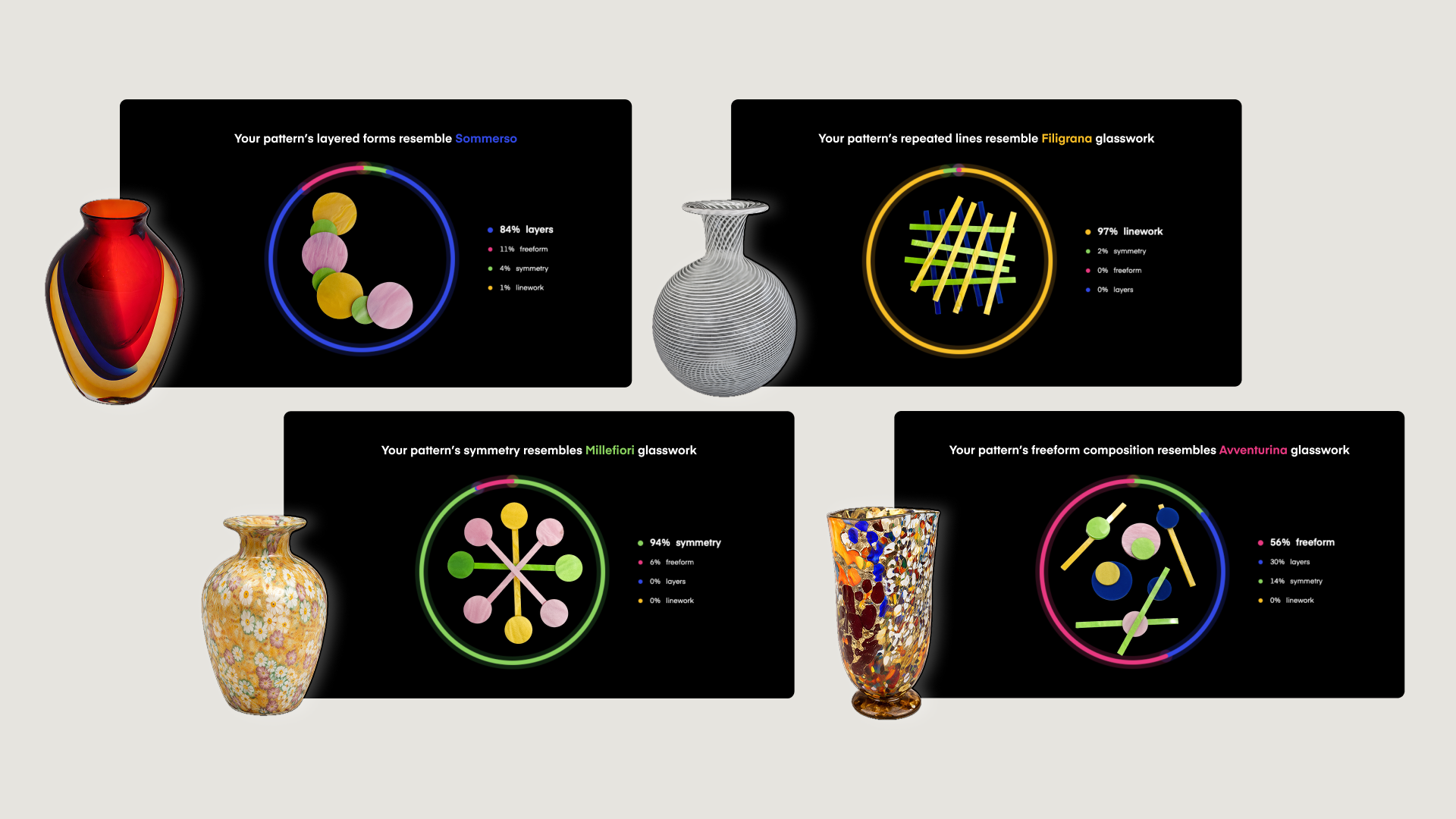
Creation gets matched with one of
four Murano glass techniques
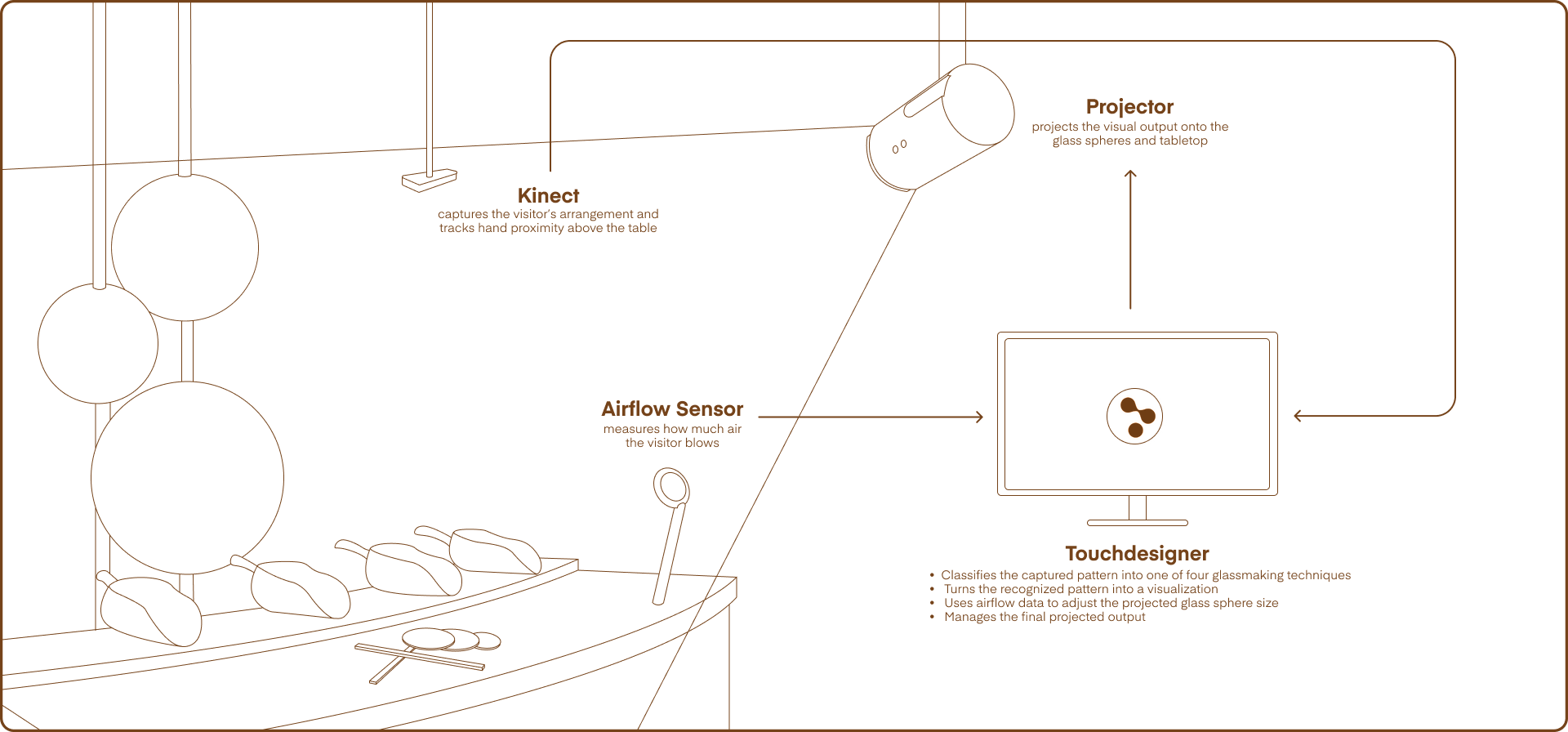
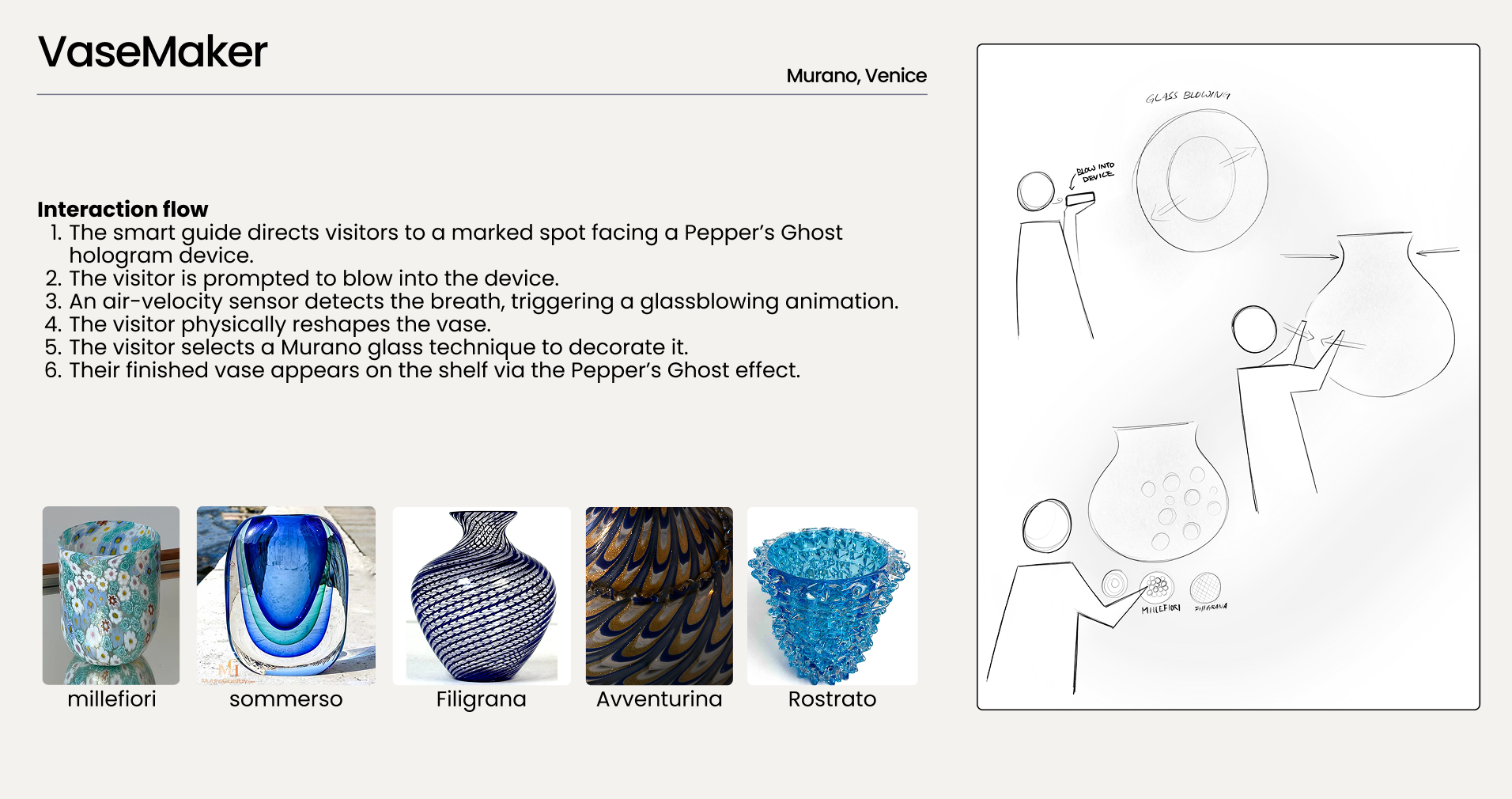
The system analyzes the pattern and matches it to one of four Murano glass techniques: Sommerso, Filigrana, Millefiori, or Avventurina, based on its visual characteristics.
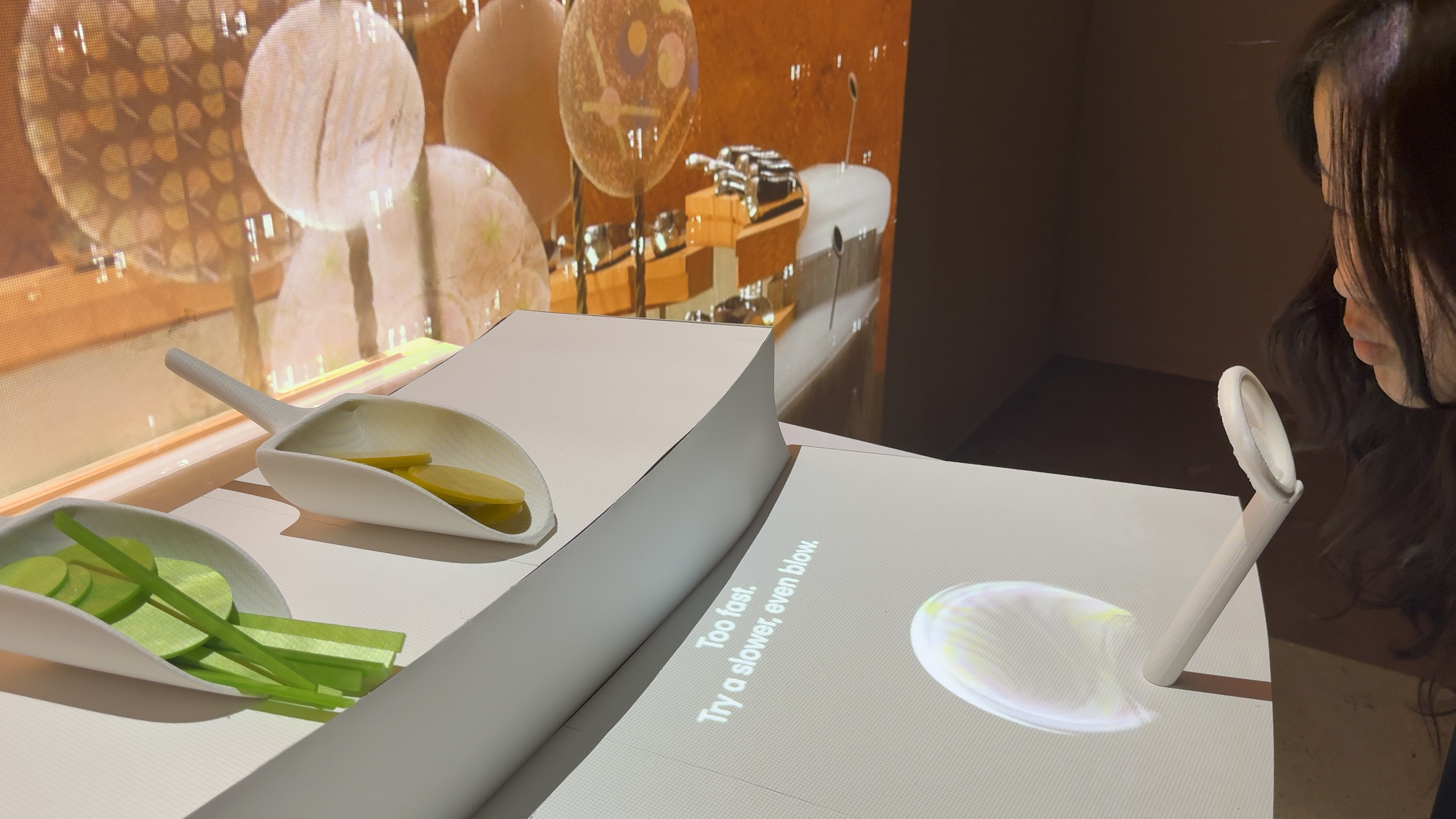
See their patterns come to life
Step into the tent to explore booth using detected airflow, visitors blow to melt and expand their pattern onto a projected glass sphere, revealing how the technique works.s for kayaking, biking, and climbing.
Leave a trace in the room
The finished form is then added to one of the spheres in the center, allowing each visitor to leave a trace within the space.
02. CREMONA, LOMBARDY
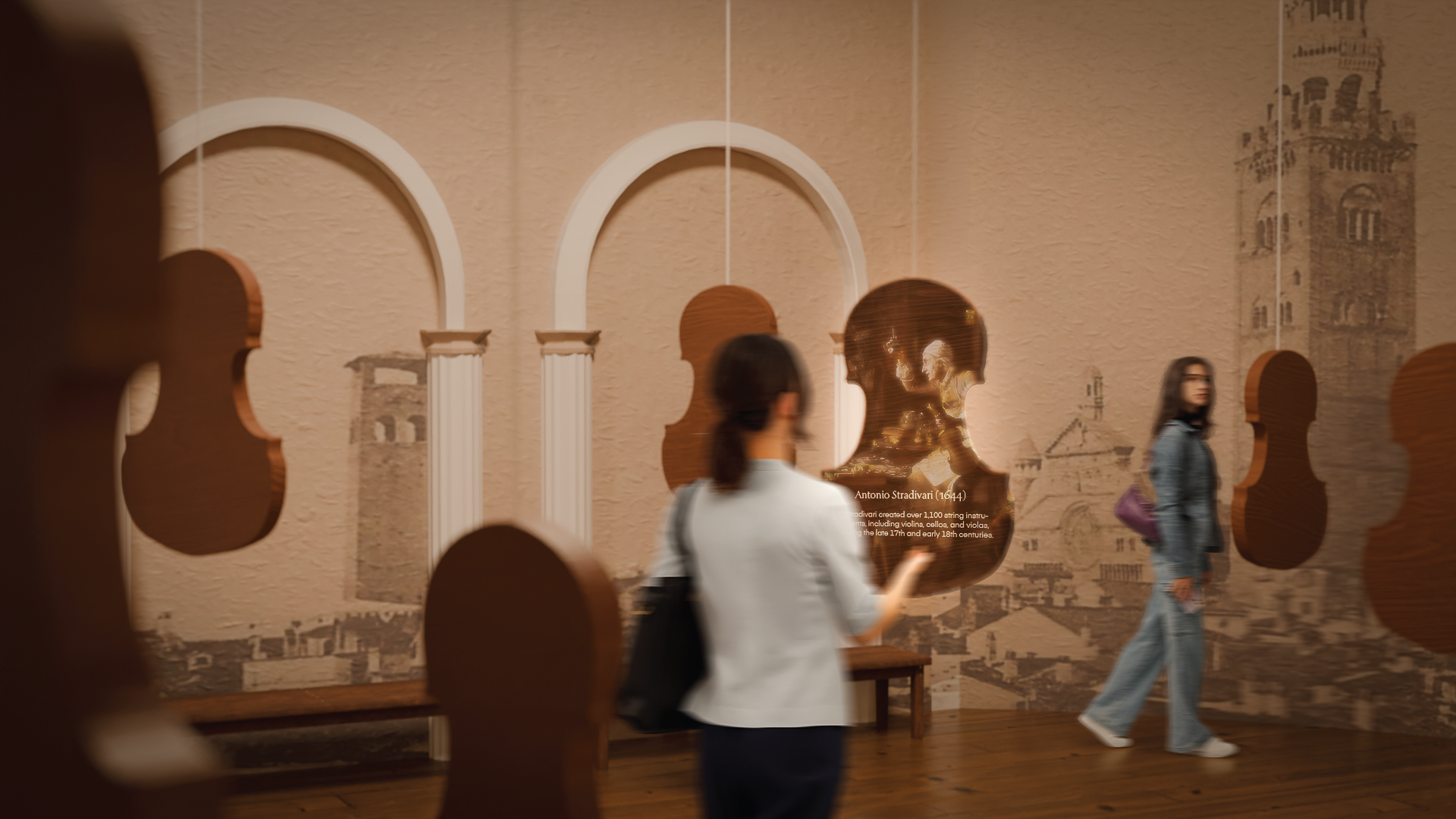
An interactive audio experience that traces the development of violin making.

Tonewood pieces fill the space, each triggering a violin tone and a short story about the craft’s history. As more visitors interact, the individual sounds build into a larger musical composition.
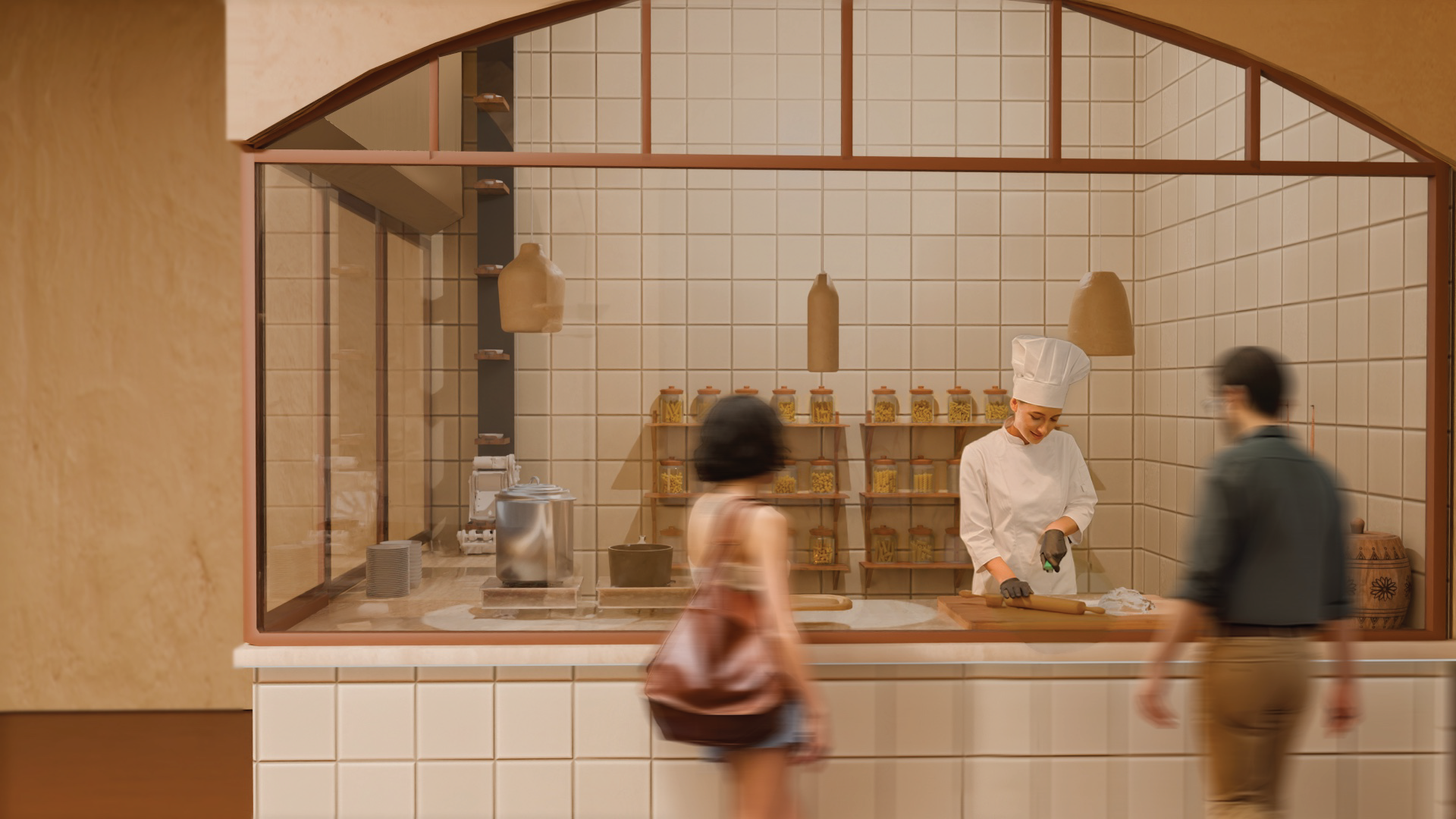
03. GRAGNANO, CAMPANIA
A live demonstration showing pasta being made.

A live kitchen lets visitors watch a professional Italian chef make pasta through a display window, connecting the craft of production to the restaurant experience upstairs.
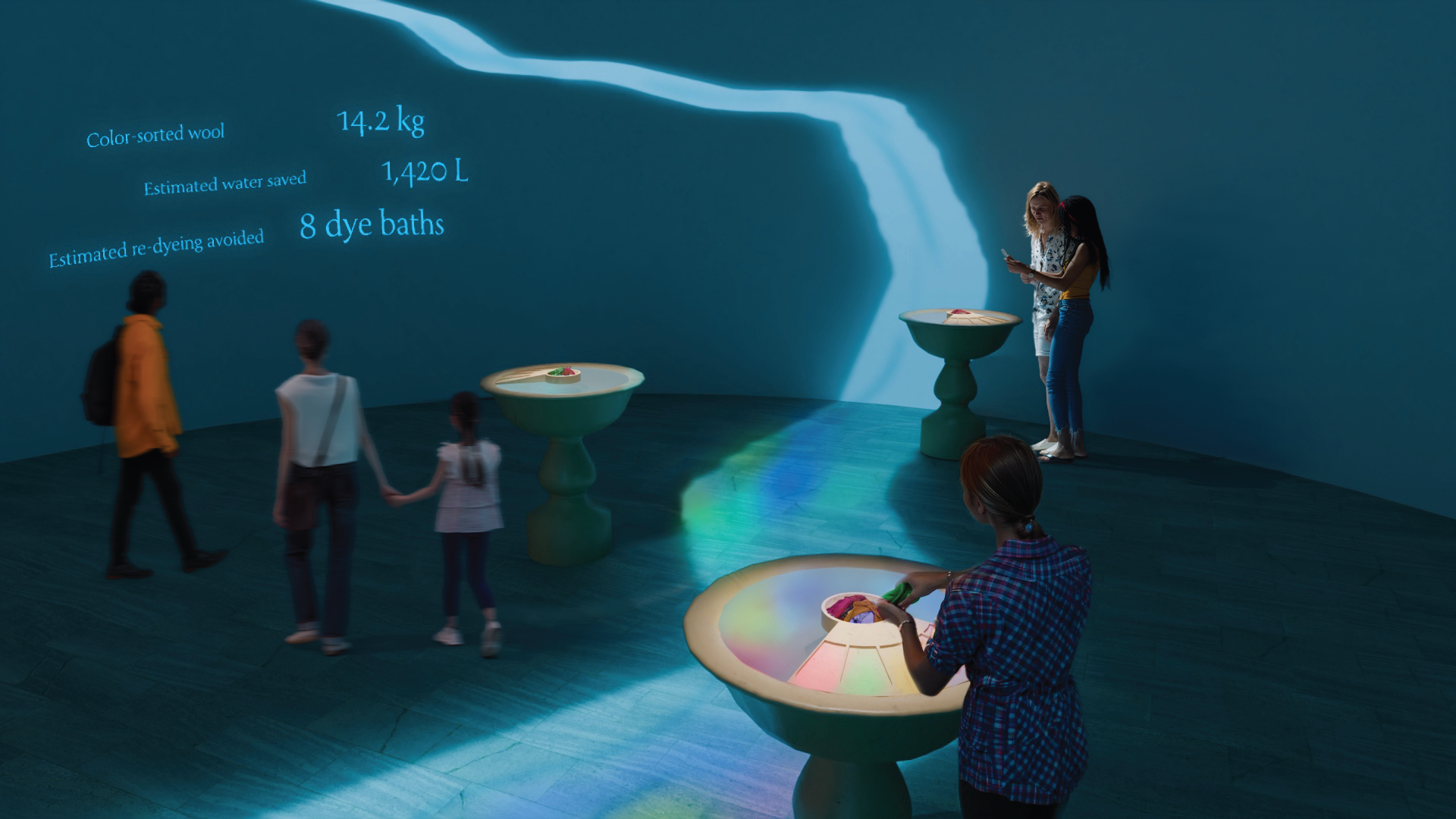
04. PRATO, TUSCANY
A room-scale projection experience introduces visitors the core of Prato’s wool recycling process.

Visitors sort wool at interactive fountains, revealing how organized materials can reduce dye waste. As they participate, the river projection and wall data visualizations respond to show their collective impact.
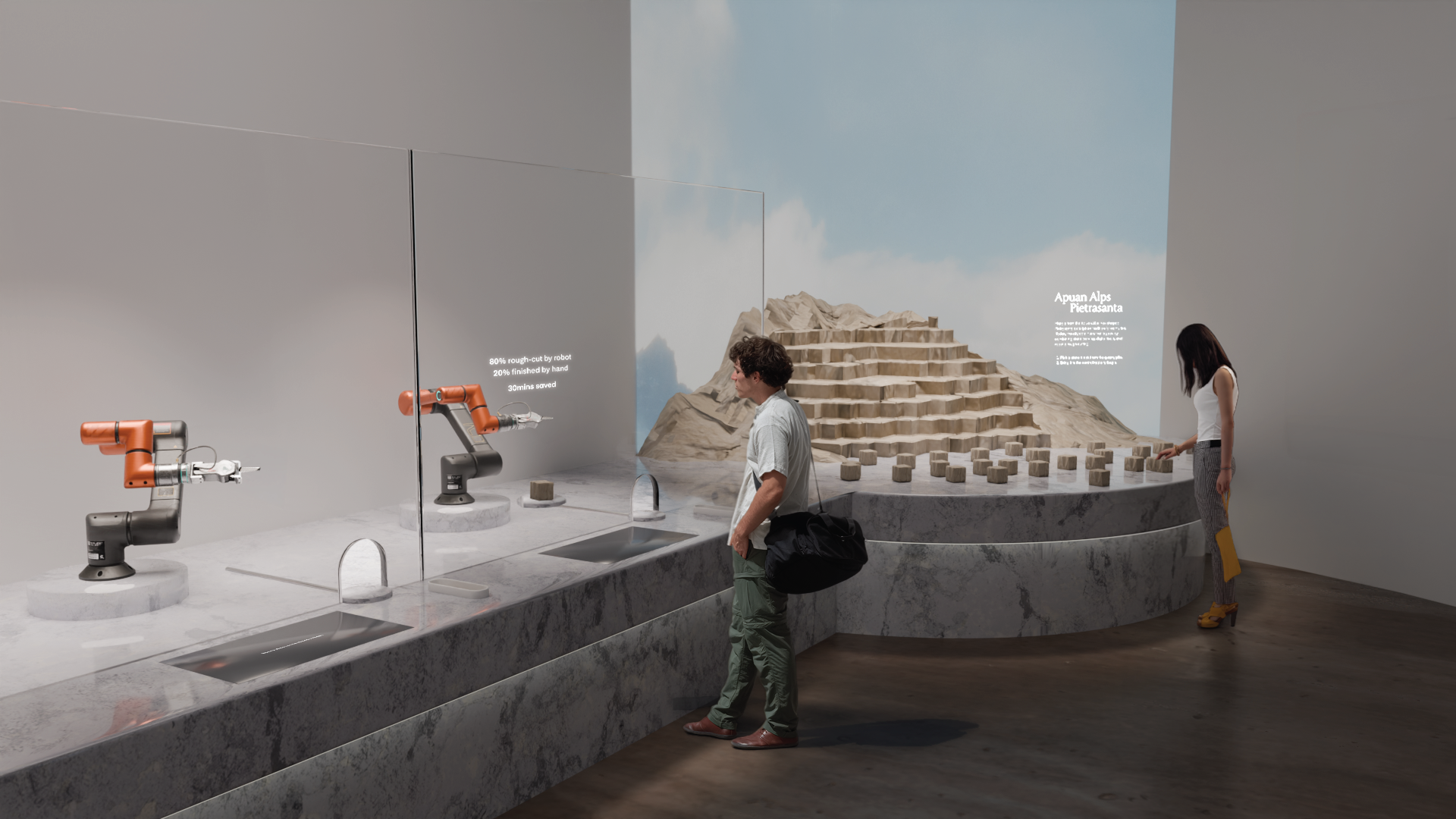
05. PIETRASANTA, TUSCANY
A robotic carving performance showcasing their sculpture-making innovation

Visitors begin at a quarry pile, where they select a foam cube and choose a sculptural motif from a curated collection. A robot then carves the rough form in 15 minutes before visitors finish the details by hand at a carving station and take the piece home.
PHASE 1: RESEARCH TO EXPERIENCE STRATEGY
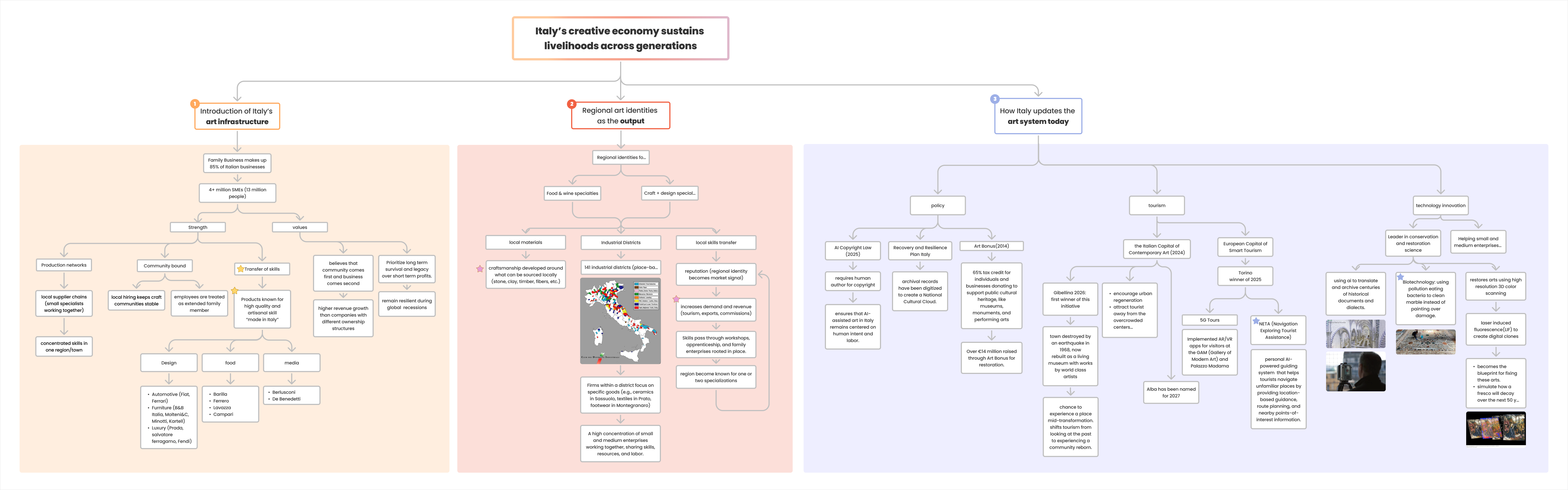
I began by researching Italy through the lens of culture, infrastructure, regional industries, and future innovation. This helped me move beyond broad national symbols and identify a stronger narrative. Then translate that research into exhibition content, visitor takeaways, and spatial experience goals.
PHASE 2: INTERACTION CONCEPT DEVELOPMENT
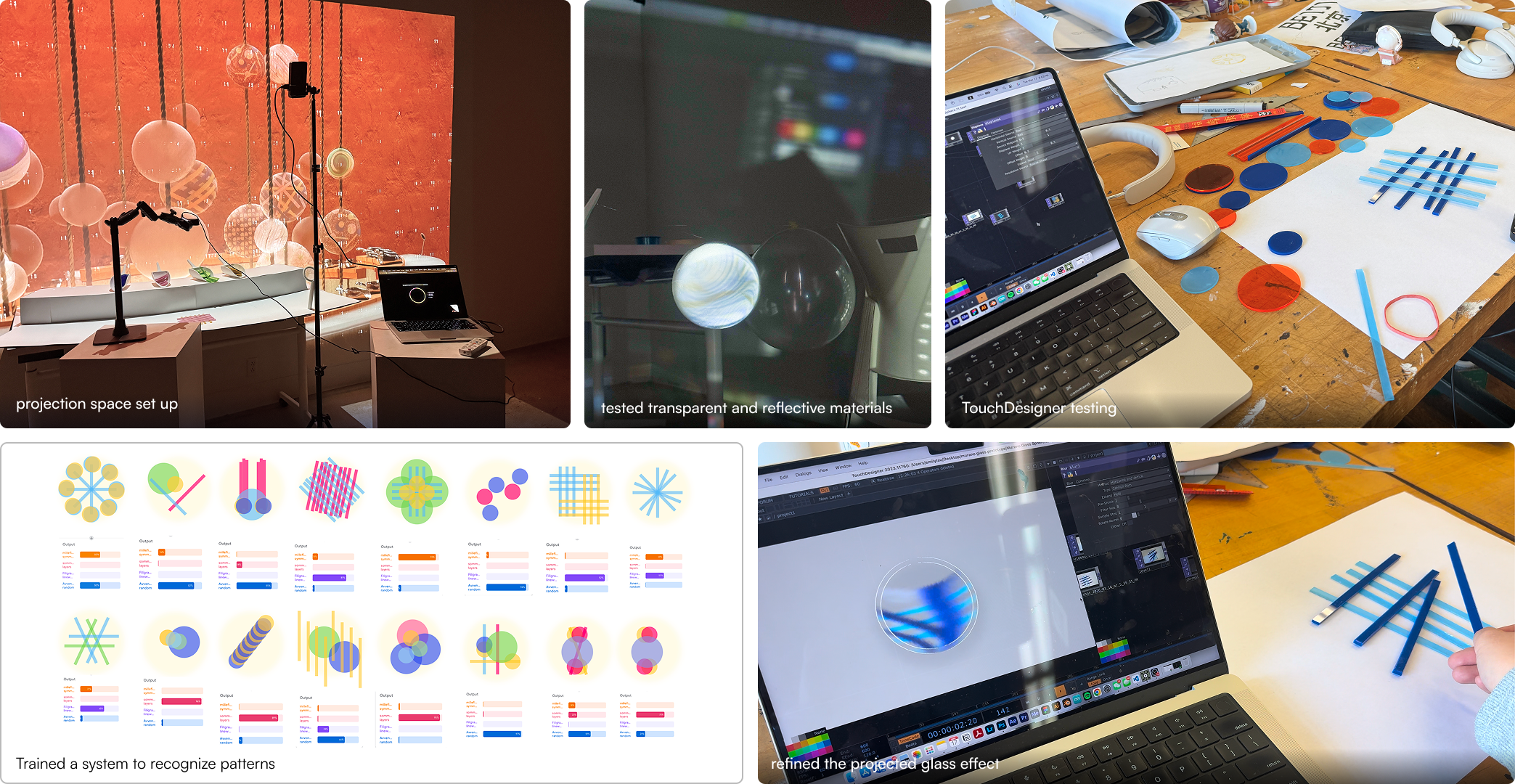
With the larger pavilion narrative established, I focused on Space 2 as the main area for refinement. I explored multiple interaction concepts for the location-based stores, using sketches, references, and quick prototypes to test how each craft story could become a hands-on visitor experience.
PHASE 3: MAPPING THE VISITOR JOURNEY
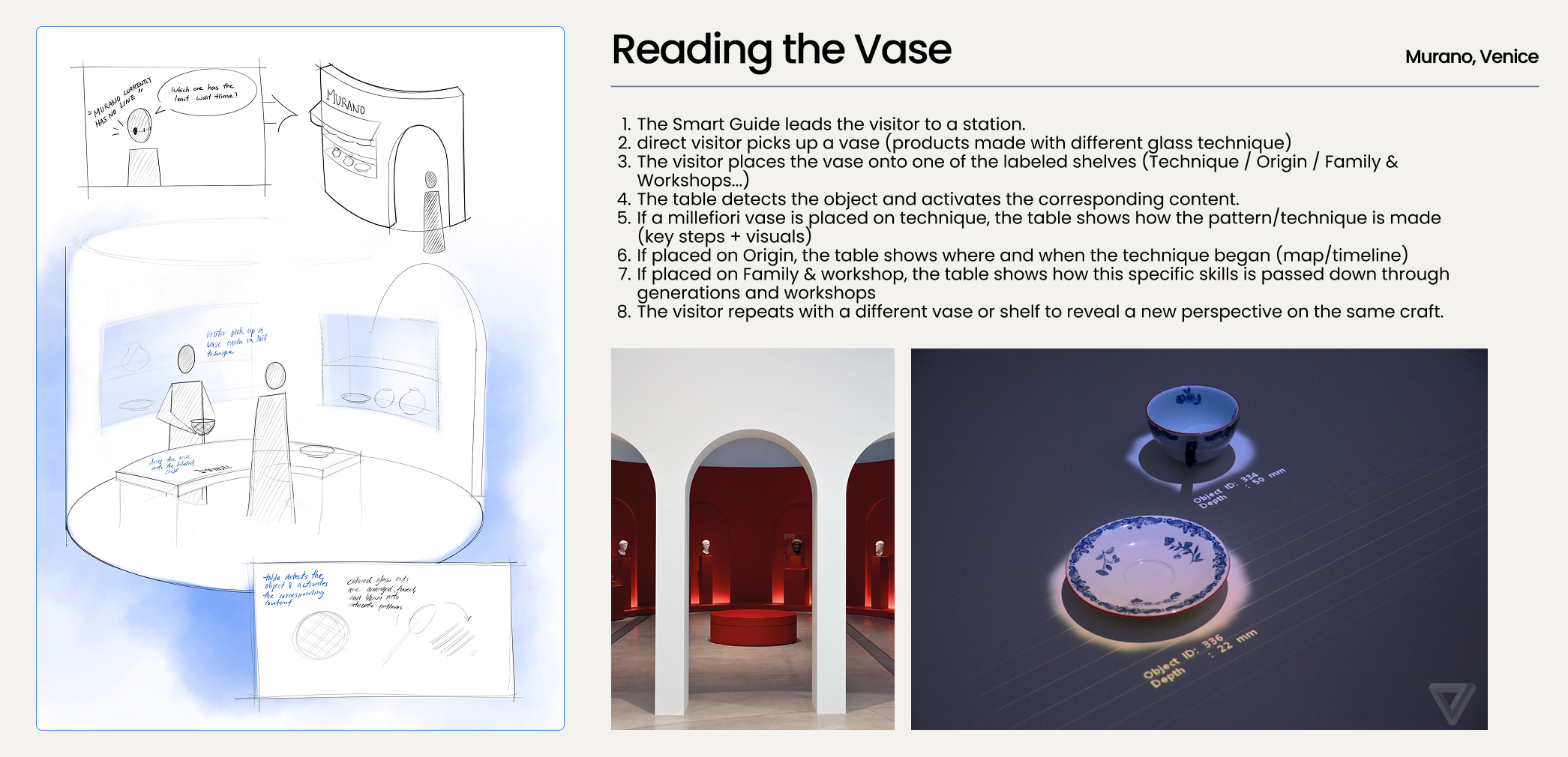
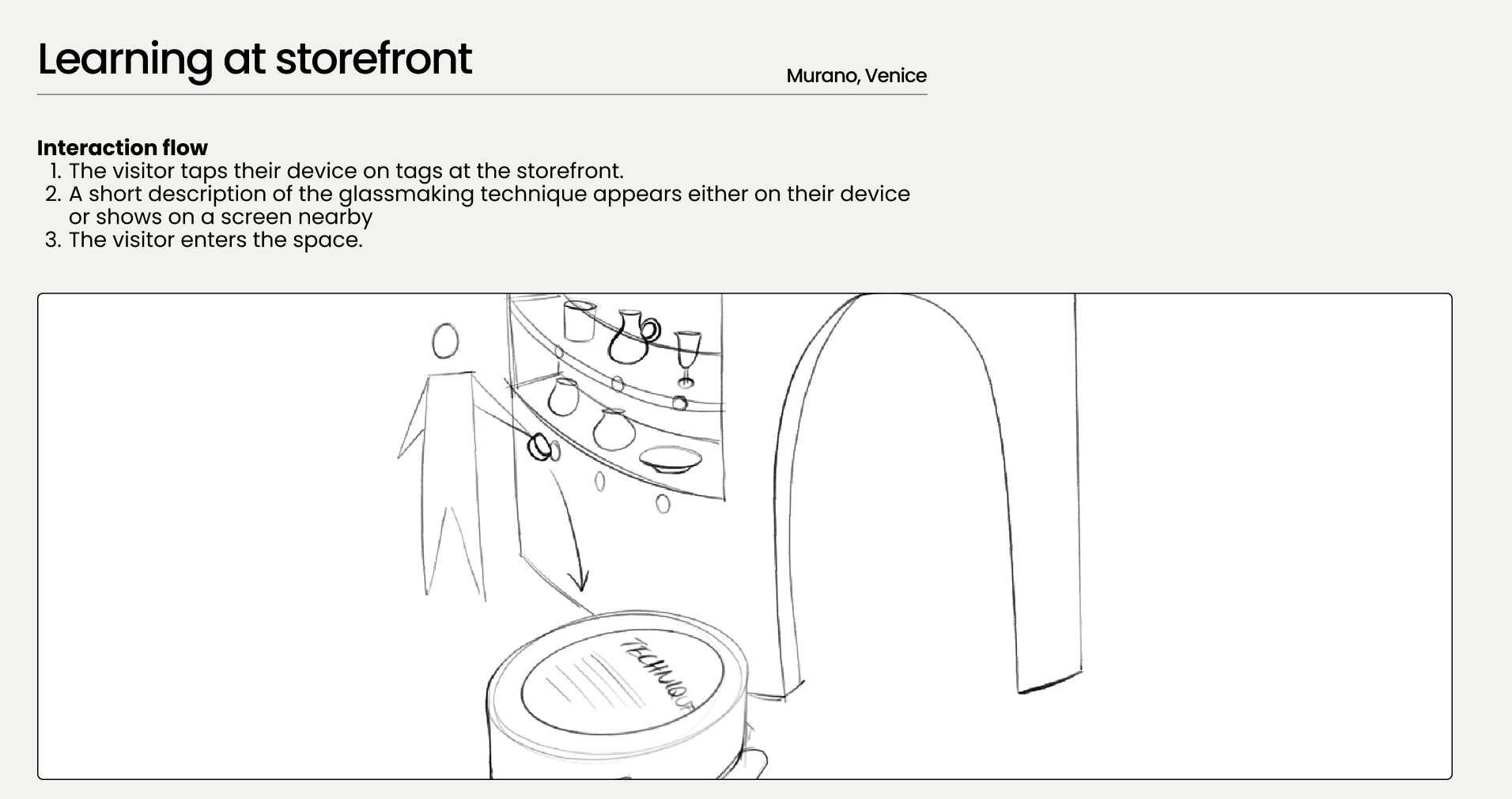
I sketched the experience step by step to understand how visitors enter the store, follow prompts, interact with the glass objects, and move through the space.