Patagonia Action
A pop up experience turning Patagonia’s action network into an approachable first step for new participants.
An experience that brings Patagonia’s existing community and Action Works network into a physical experience, helping newcomers discover local organizations, join an outdoor activity, and leave with a clear path to participate again.
Team
Timeline
Role
Tools
Individual
8 weeks, Fall 2025
Brand Experience Designer
Blender, Rhino, Photoshop, Lightroom, Illustrator
KEY INSIGHT & OPPORTUNITY
Patagonia’s mission attracts people who share its values, but many still do not know how to turn that alignment into a first step. Programs like Patagonia Action Works and community events offer a way in, though they can be easier to navigate for people who are already connected to environmental communities.

How might we design a first-time experience that makes participation clear and repeatable?
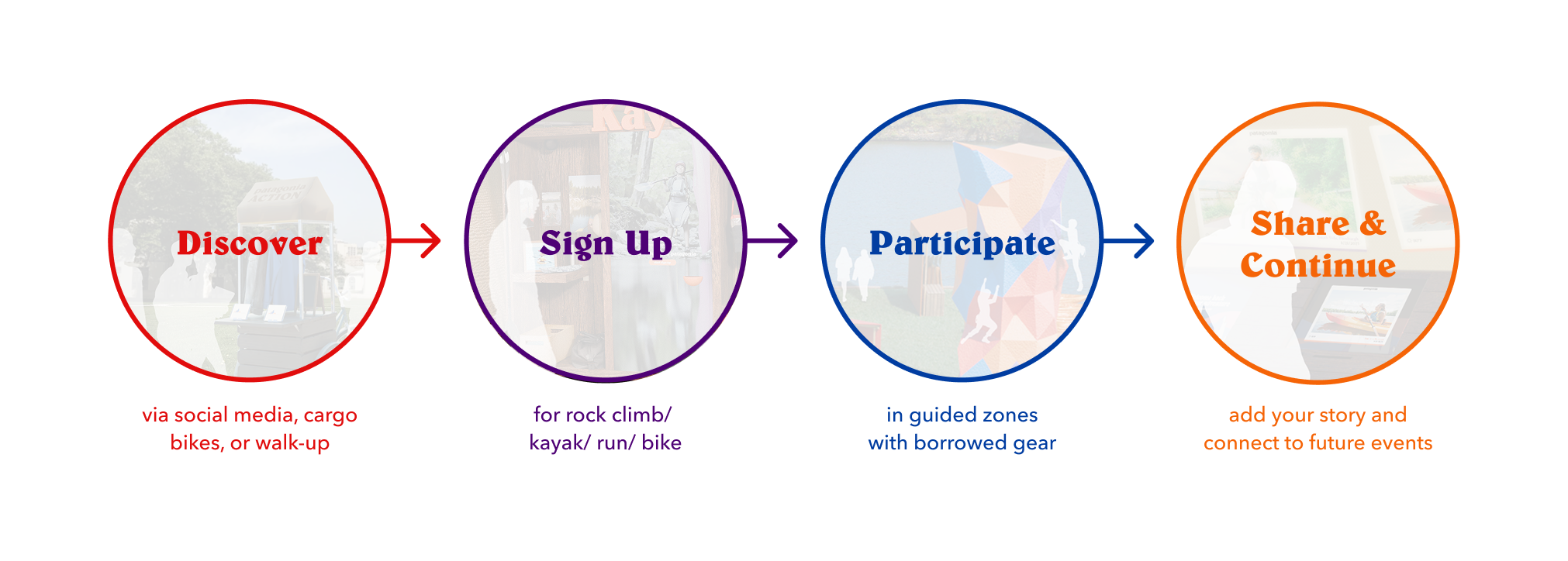
USER FLOW
FOLLOWING ONE JOURNEY: KAYAK
1. Bringing the experience to the city
Patagonia cargo bikes visits campuses and downtown to promote and encourage pre-registration.
2. Discover it naturally in South Side, Pittsburgh
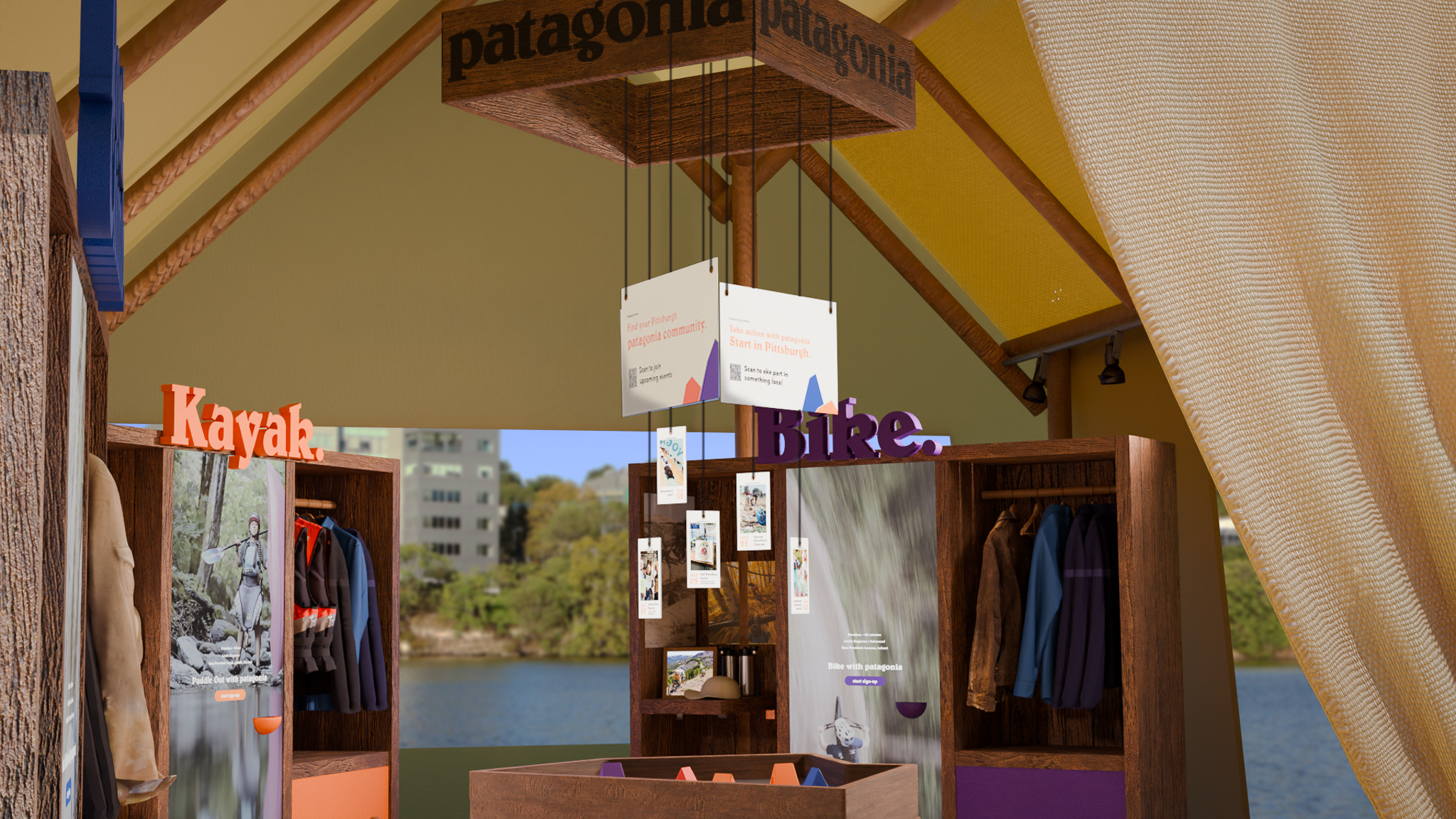
3. Walk around & discover what activities are offered
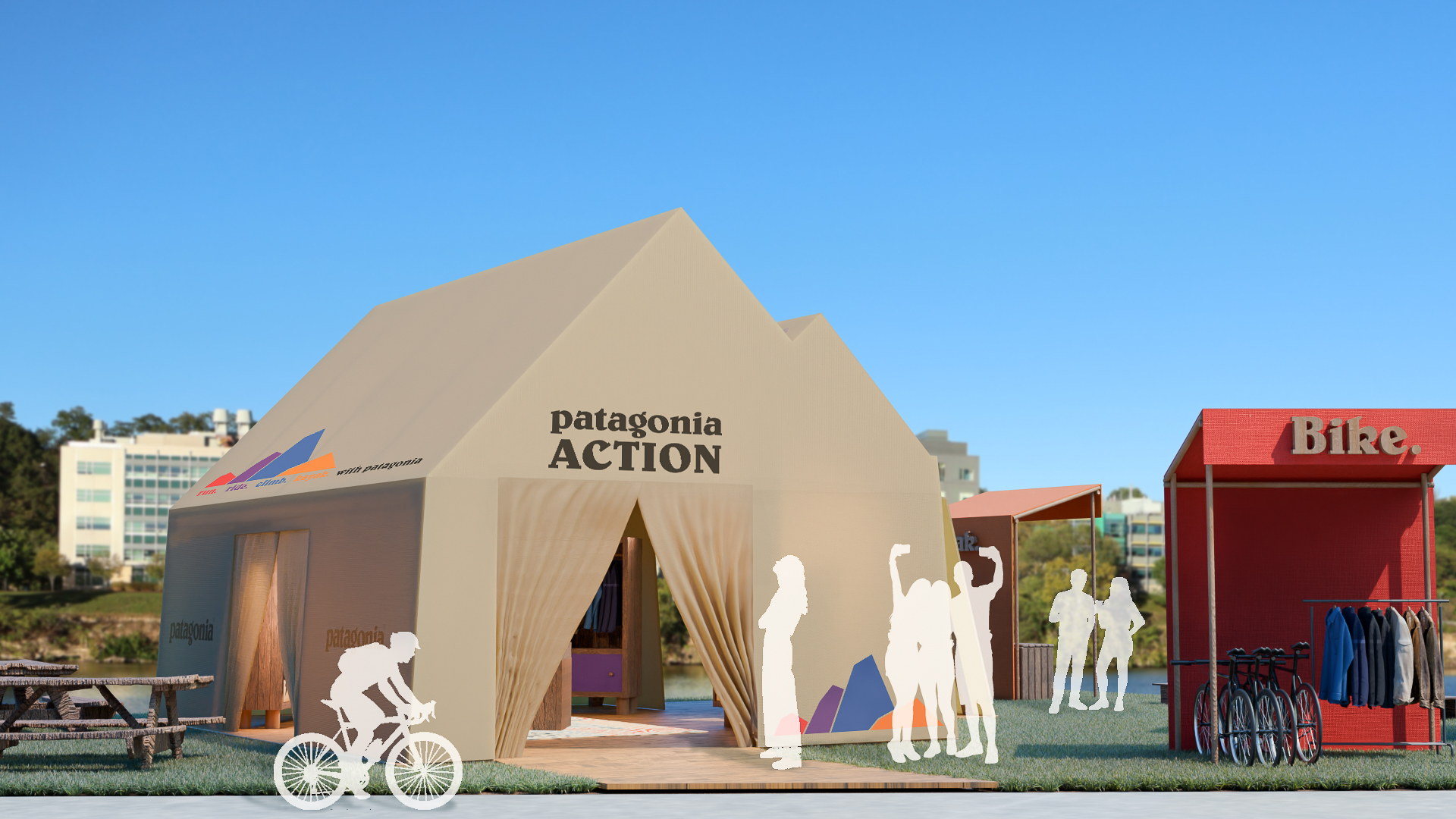
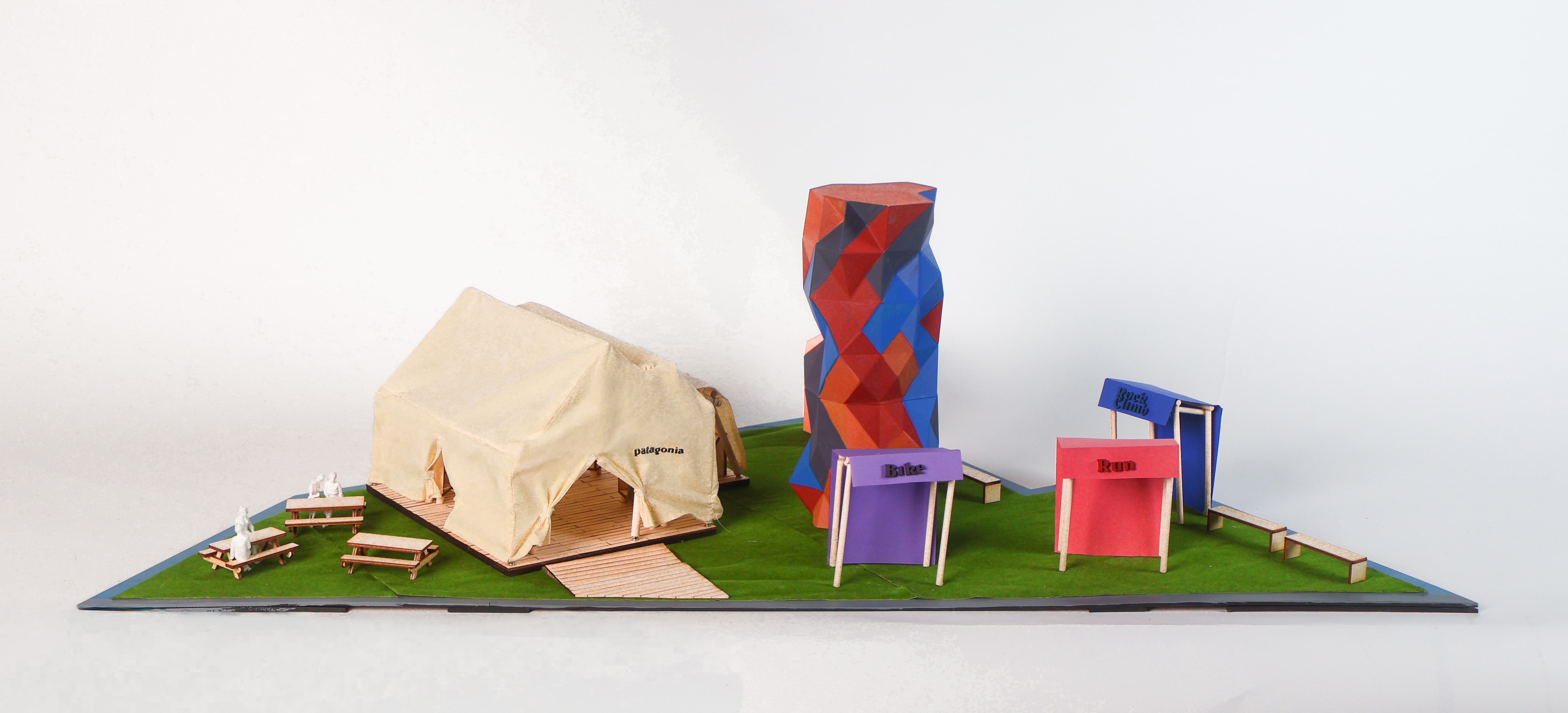
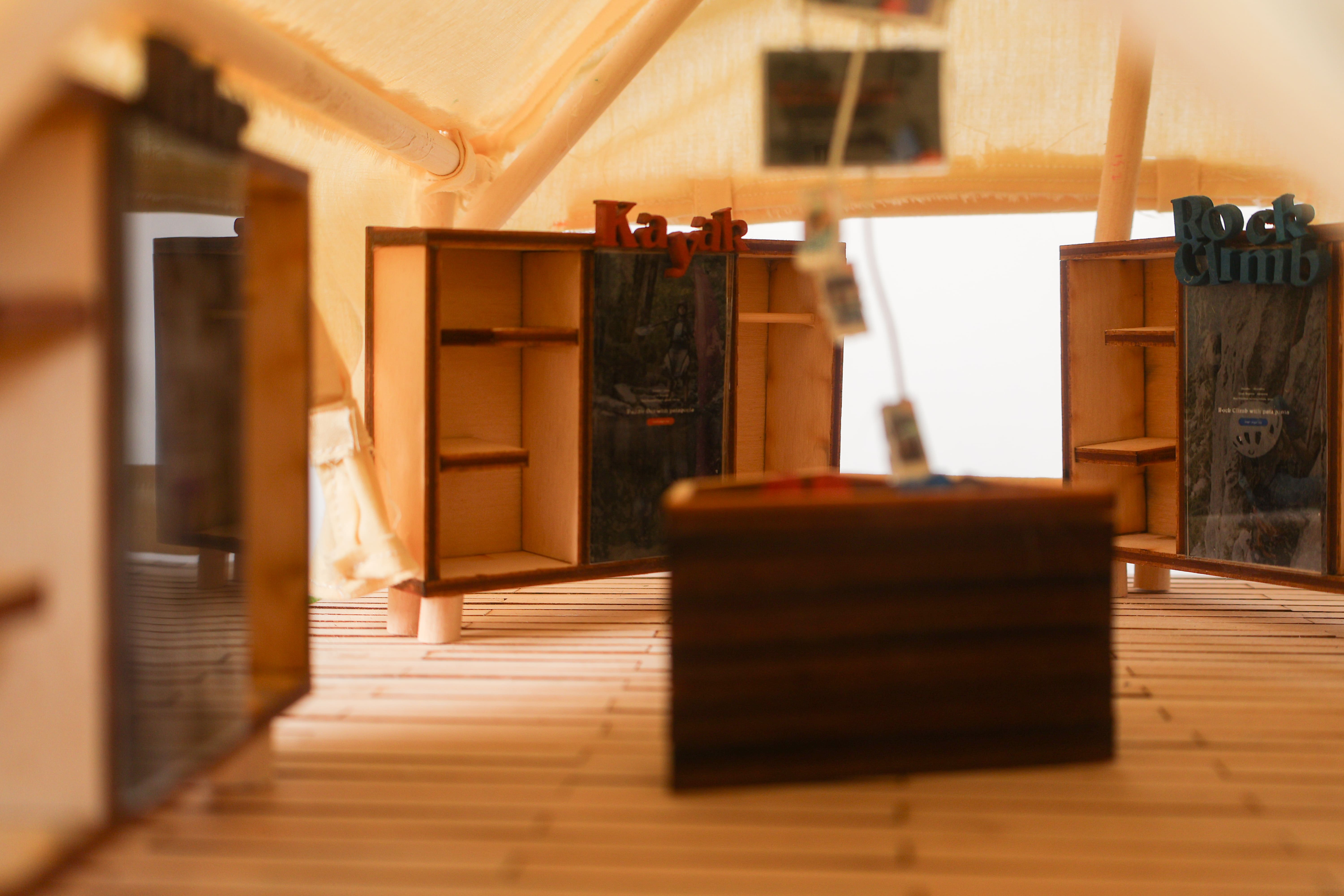
Step into the tent to explore booths for kayaking, biking, and climbing.
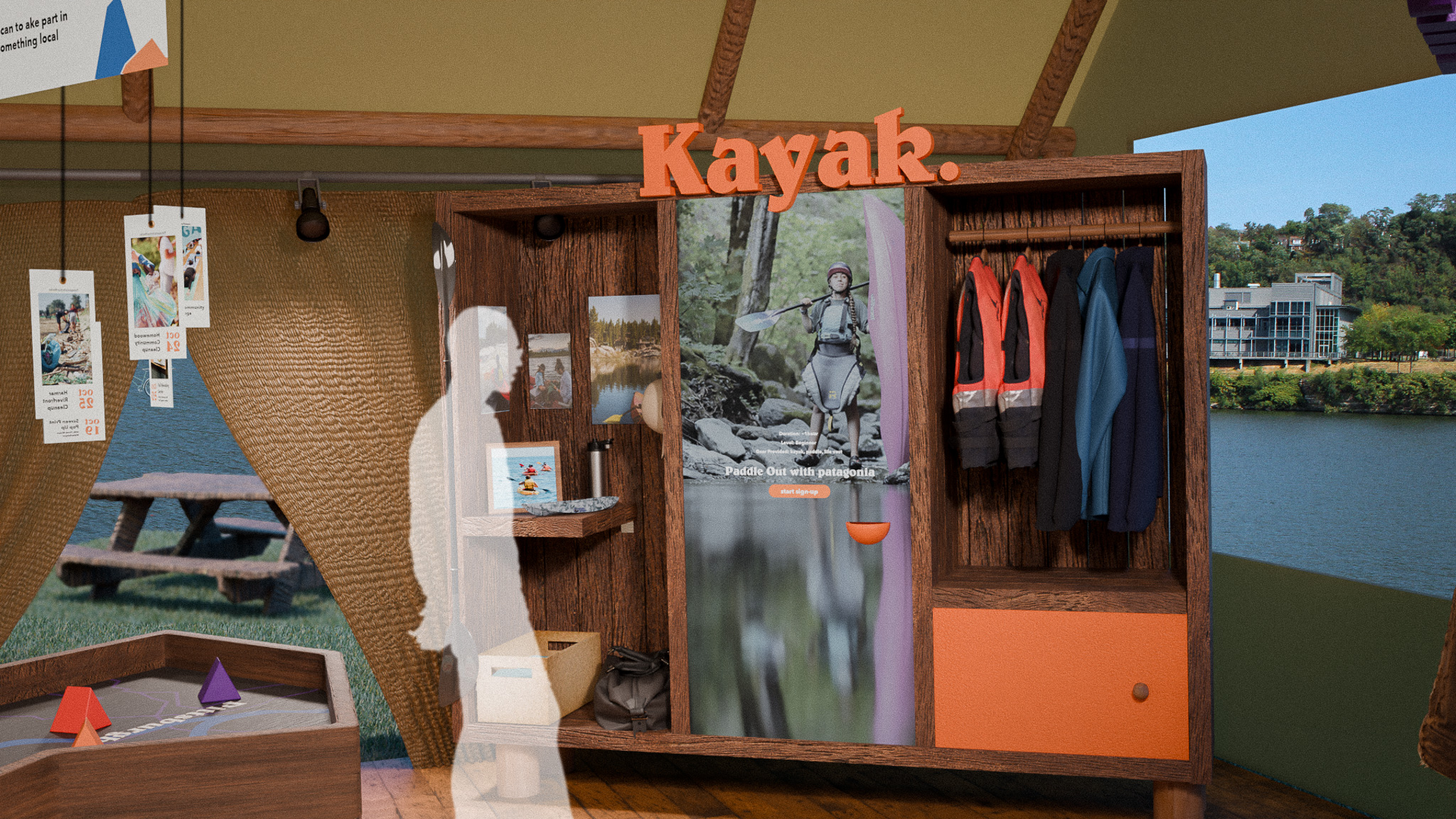
4. Sign up for an activity and receive a wristband
Each booth displays gear and activity-specific items to make the experience feel more immersive. When they’re ready, visitors choose a time slot and pick up a wristband.
5. Gear up and have fun!
Participants meet a volunteer lead, scan in, gear up, get a short safety briefing, and head out while the lead captures photos.
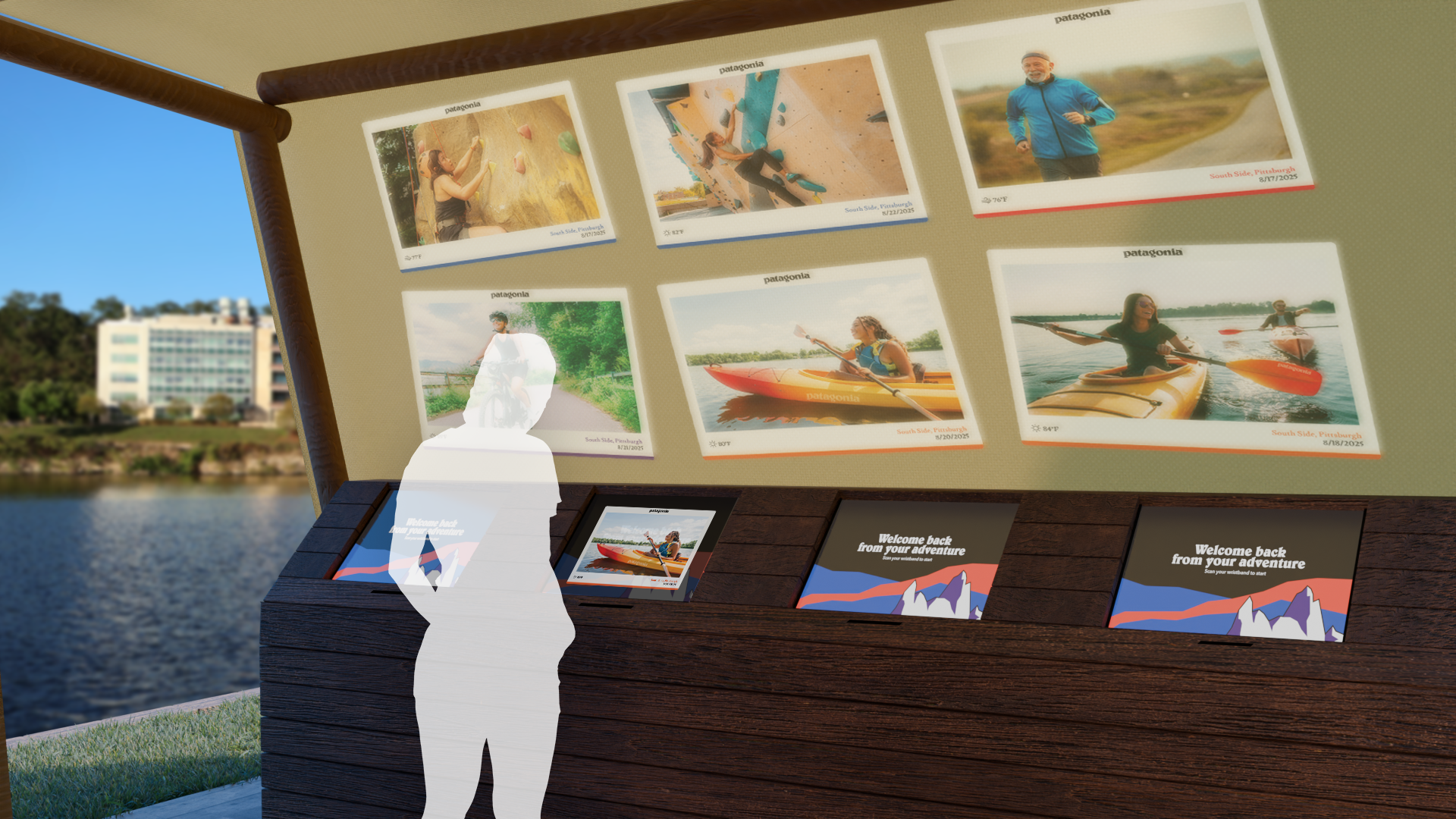
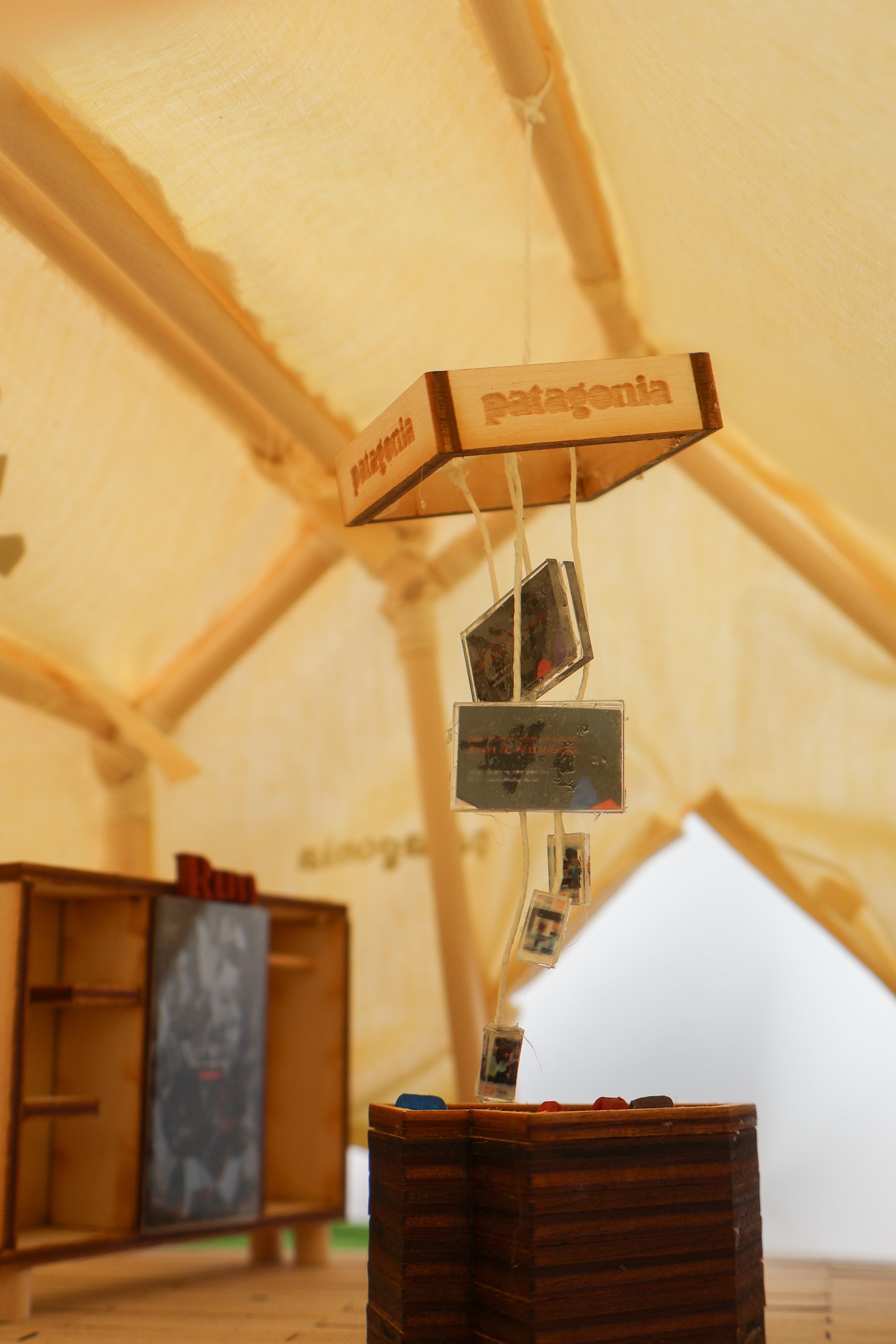
6. Scan Wristband to View & Select Photos
Participants return to the main tent to visit the photo kiosk. By scanning their wristband, they can view and select photos captured during their adventure.
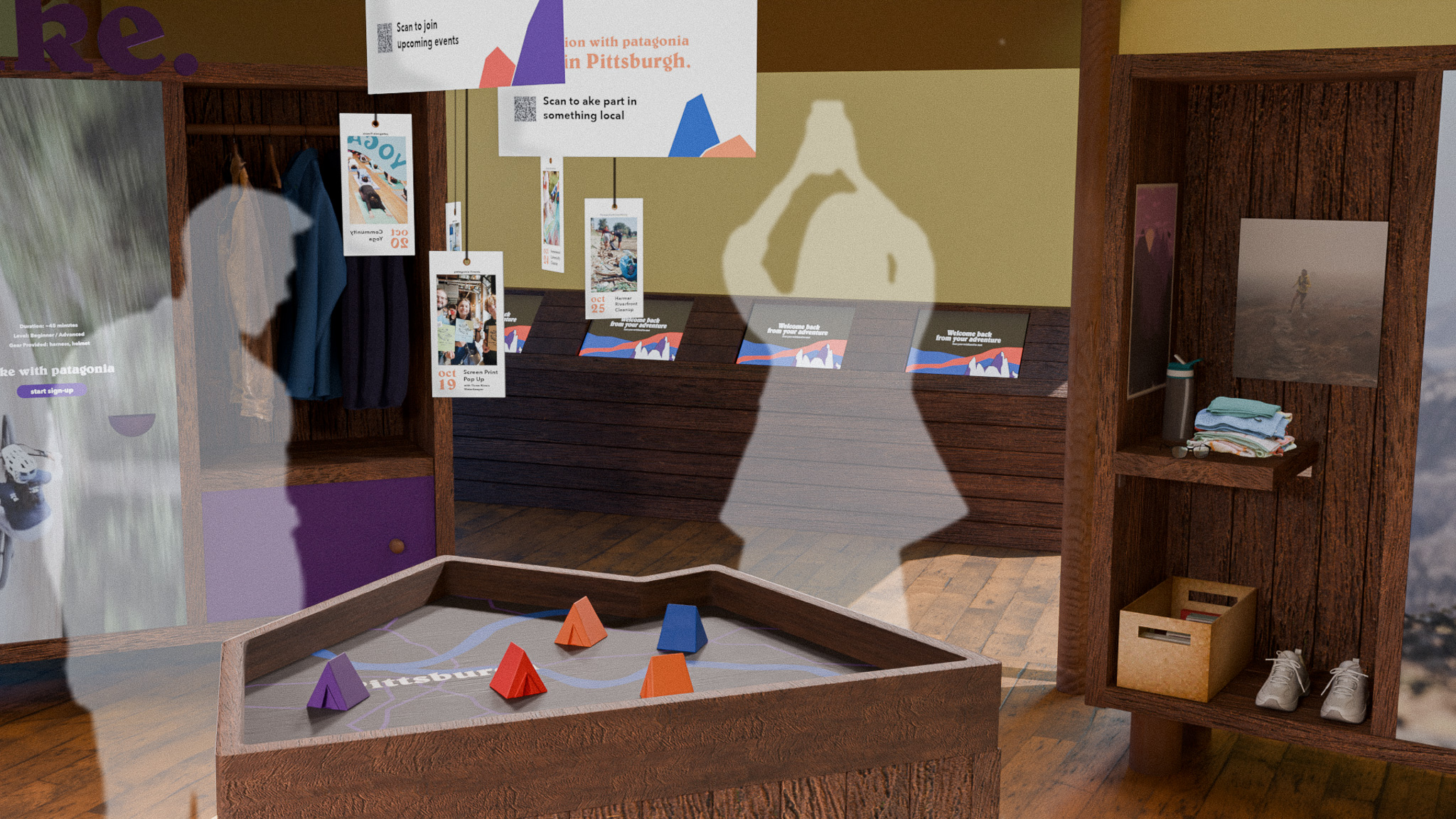
7. Explore the action map and sign up for more Local activities & upcoming programs
A community table highlights Action Works and local Pittsburgh events, with QR codes to sign up.
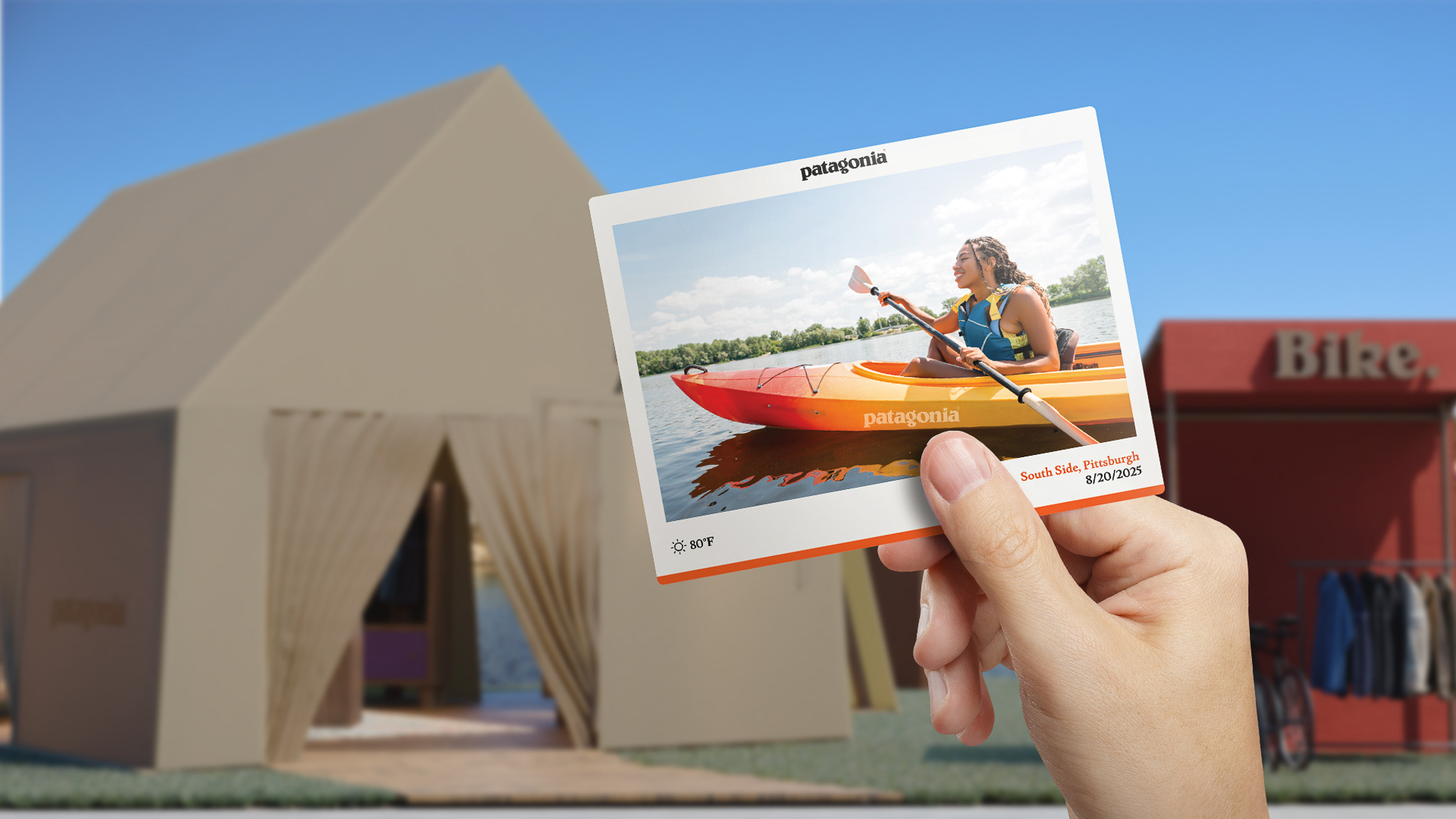
8. Printed Memory to Bring Home
Photos are printed on reusable Worn Wear fabric, and serves as a personal reminder of the experience.
VISITOR FLOW
The space takes inspiration from the shape of the Patagonia logo and is divided into three main areas
INITIAL RESEARCH
The first phase of the project focused on understanding Patagonia’s brand, including its voice, audience, mission, competitors, and customer touchpoints.

One thing that stood out was how often the brand creates ways for people to participate, whether through repair, local events, or environmental action. This helped shape the pop-up as an experience built around active participation.
full research can be found here
AUDIENCE
Primary
Students
Young professionals
Outdoor enthusiast
Aged 18–35
Secondary
Local regulars who’ll try new outdoor activities or bring friends
Other
Individuals and families near the site
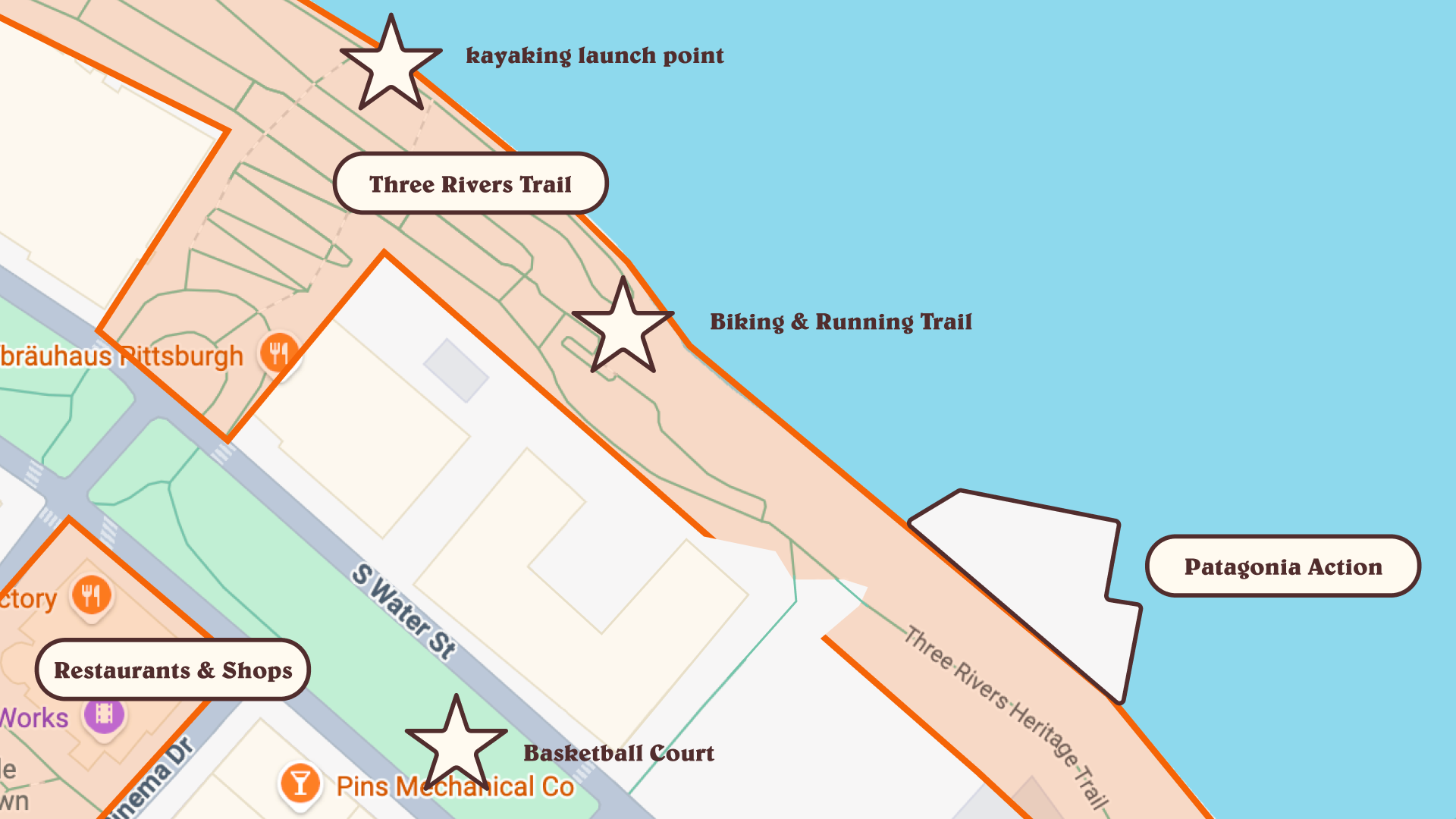
SITE SELECTION
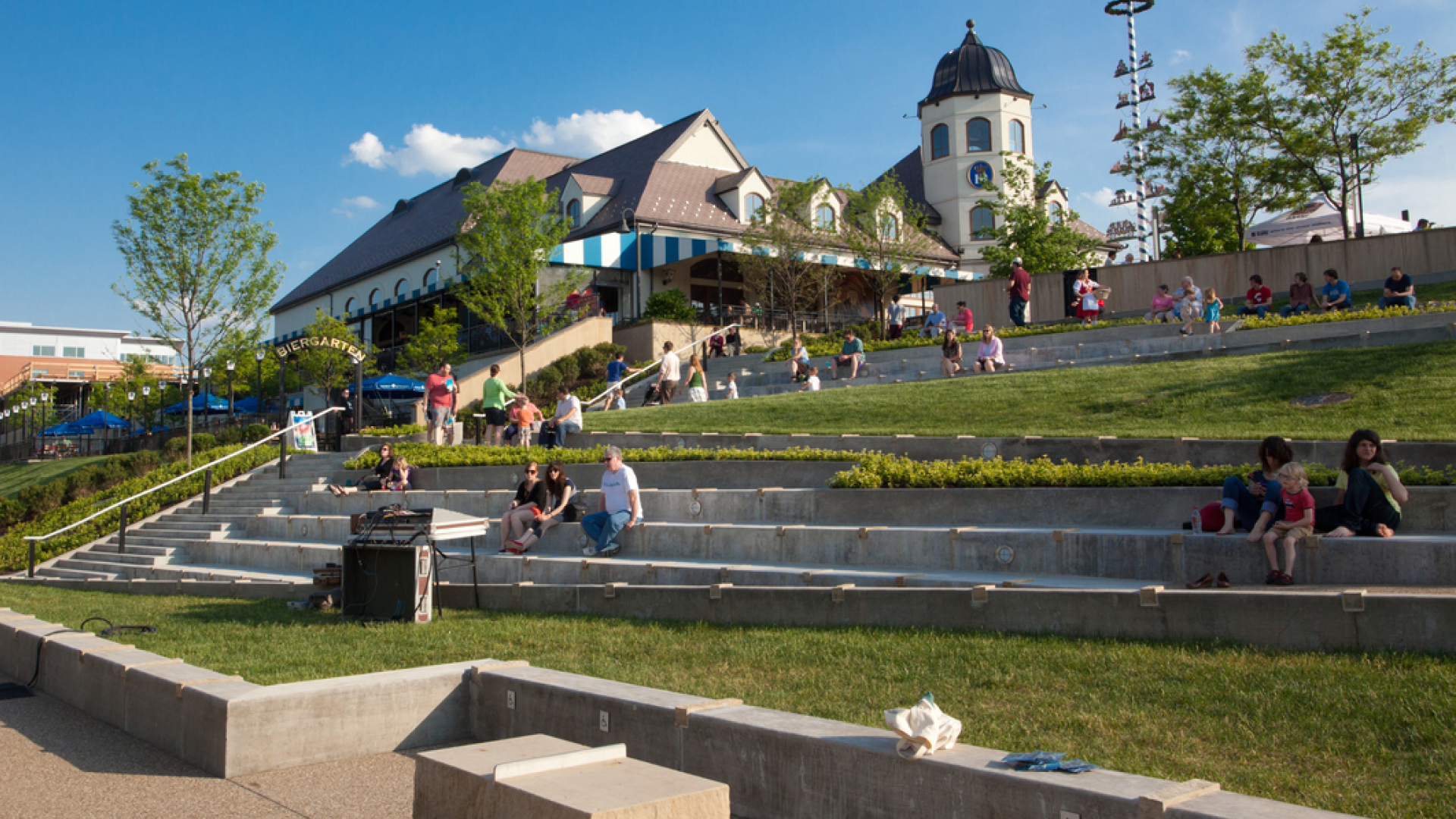
South Side Works, Pittsburgh, PA
A lively area known for its restaurants, shops, and scenic river trail. It’s a already natural gathering place for people who bike, kayak, and explore the outdoors. The structure integrates the river into the experience, and future versions would adapt to local environments while maintaining the same spirit of connection and adventure.
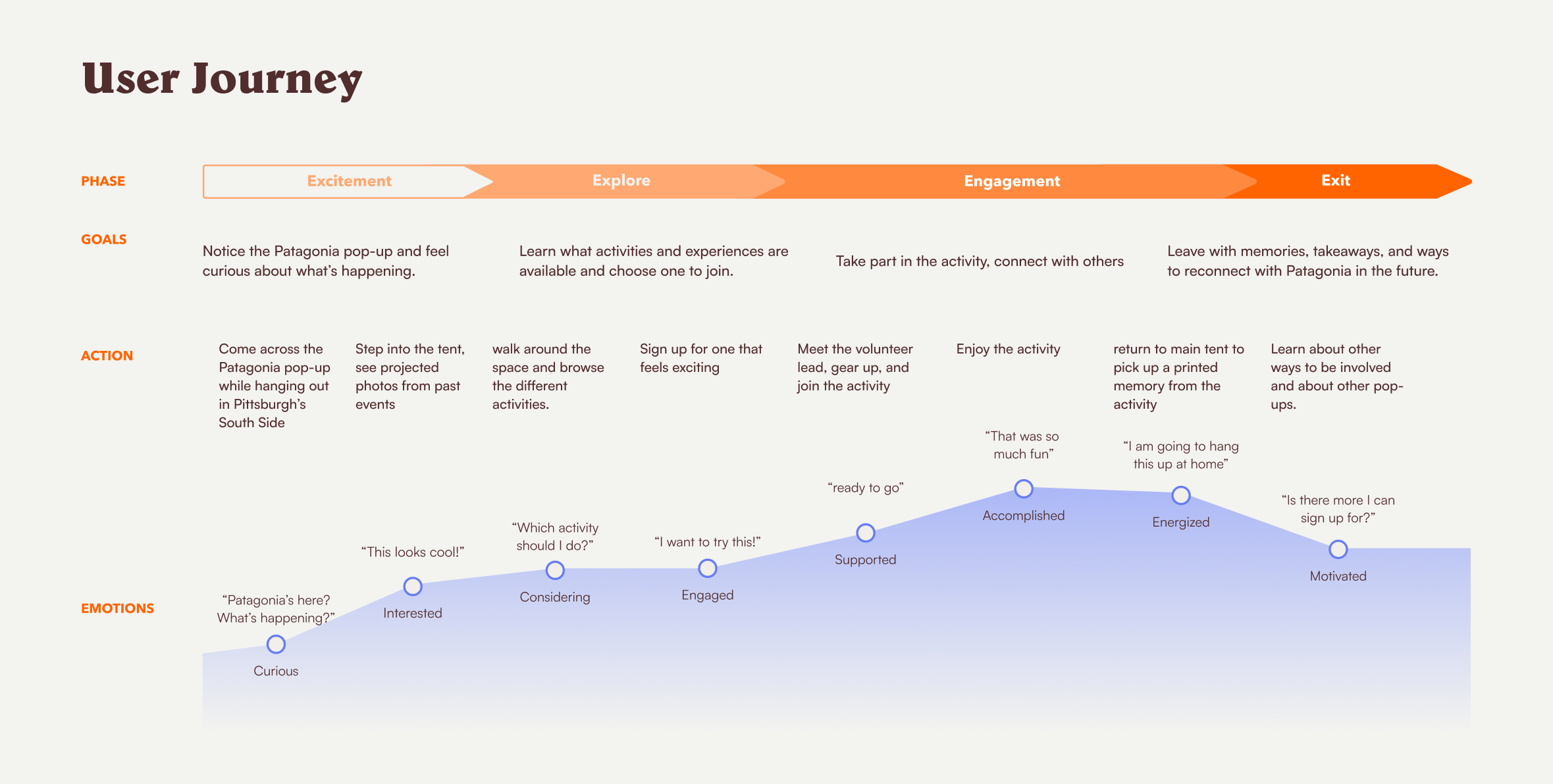
USER JOURNEY
CORE PRINCIPLES
Real People, Real Environments
use photography of real people doing real activities to tell the story.
Adventure Forward Colors
Patagonia’s bold palette stays central to signal energy, outdoors, and momentum.
Mission First
Patagonia’s audience connects through shared values. The pop-up prioritizes participation and mission-aligned product moments to build long-term brand trust beyond a single purchase.
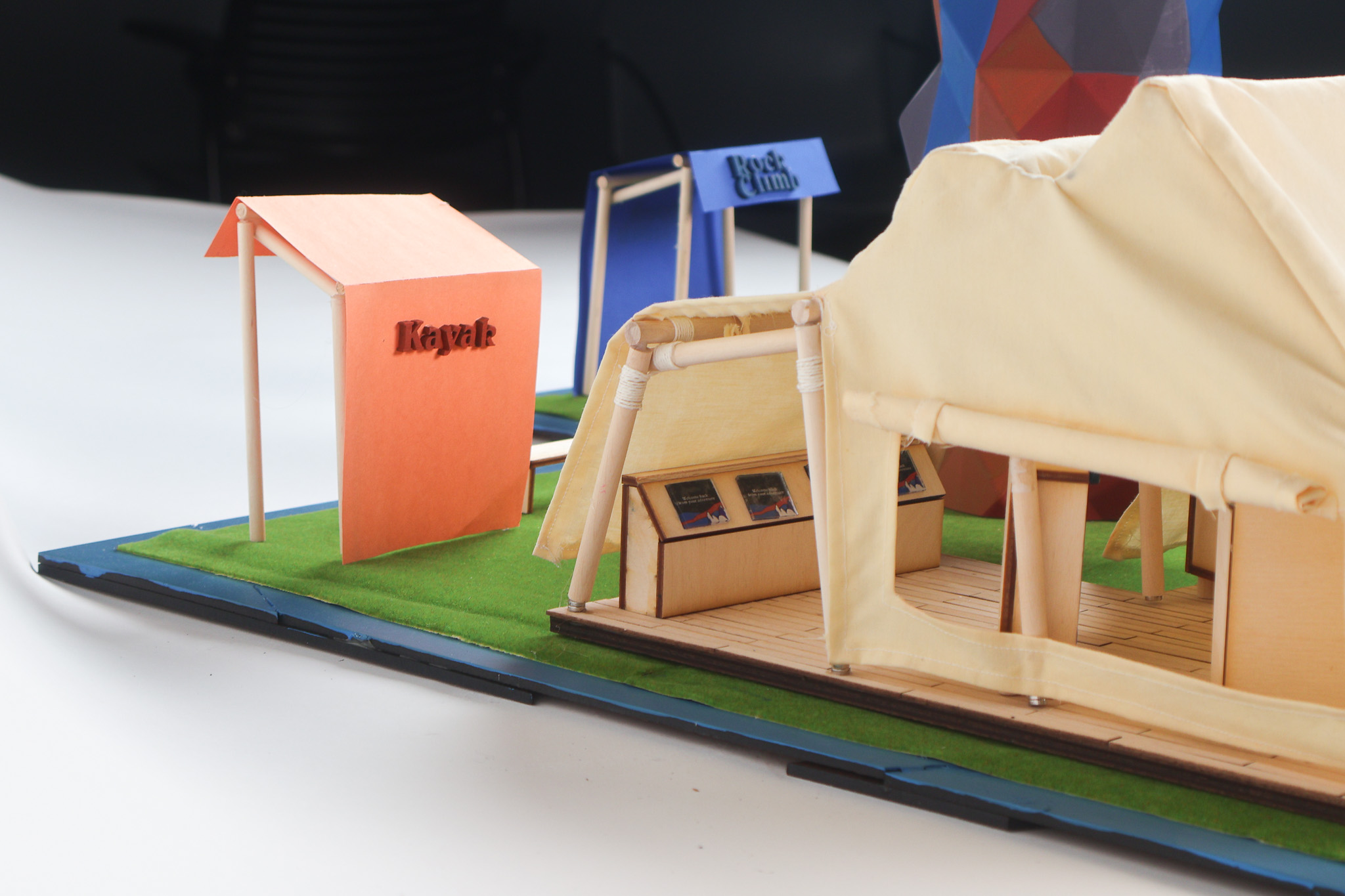
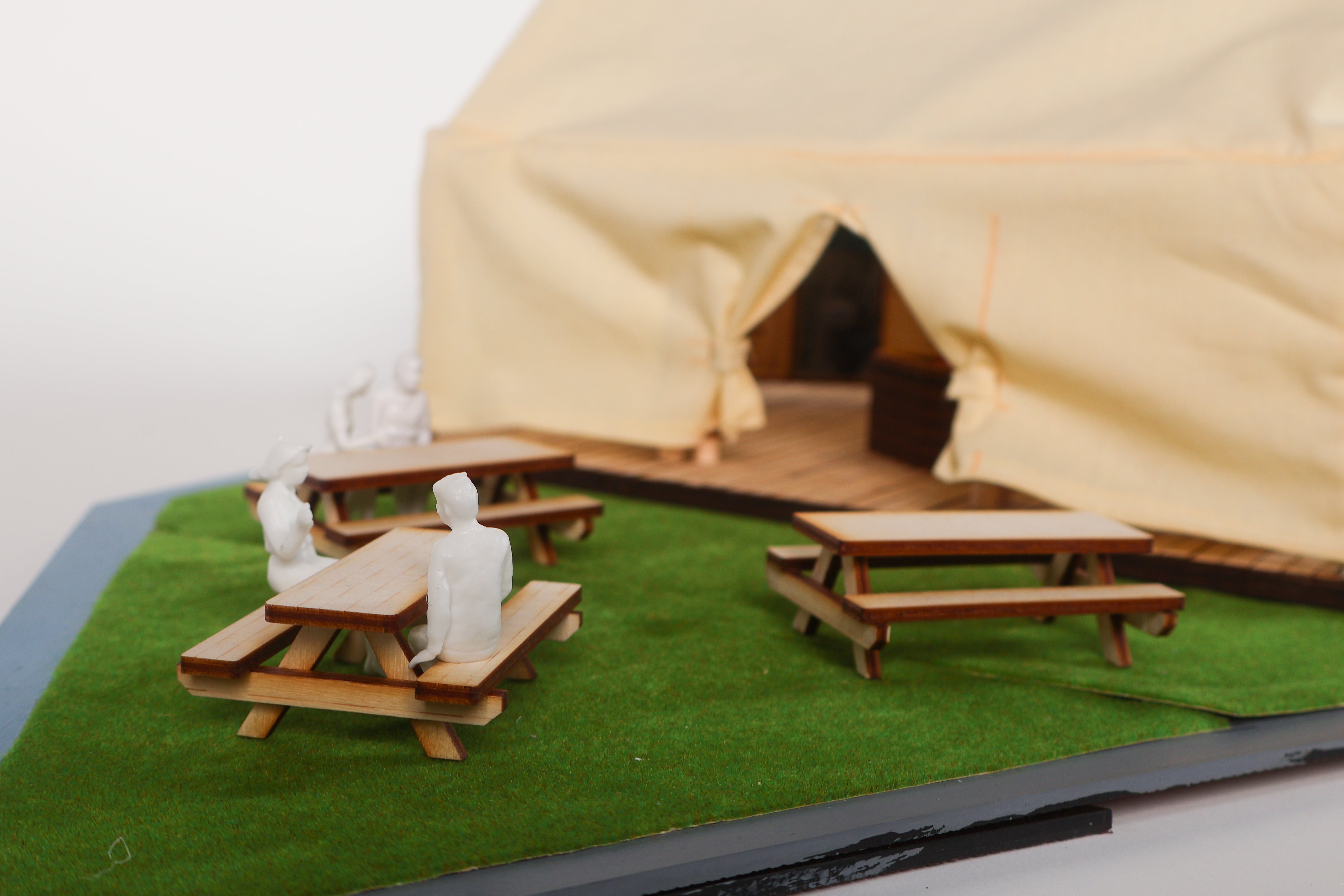
SCALE MODEL
REFLECTION
This project has been one of my favorite one so far. It really pushed me to think about how a brand’s story can translate into a spatial experience. Through brand research, insight finding, refining user journeys, and practicing client-facing presentations, I grew a lot as a designer. It taught me how to balance storytelling and audience engagement, and on the more chaotic side... I learned how to sew for the first time and built a tent model in two days, which felt a little ridiculous but also very fun!